Reorganised from the archived boutique bag comparison, with material and inspection details from our canvas tote program.
The first return came back on a Tuesday, three weeks after the bags went out. A customer had carried a cotton tote home, used it twice, and brought it back to the counter with a note about the print. By the end of that week, two more came back from the same batch, and the shop owner put all three on a table and asked what had gone wrong.
The bags had looked right in the sample room. The logo sat where the artwork placed it, the handles matched the approved swatch, and the weight felt reasonable in hand. What the returns exposed was not one defect but a chain of small decisions made months earlier, when the shop chose a material for the wrong reasons.
The Bag That Came Back to the Counter
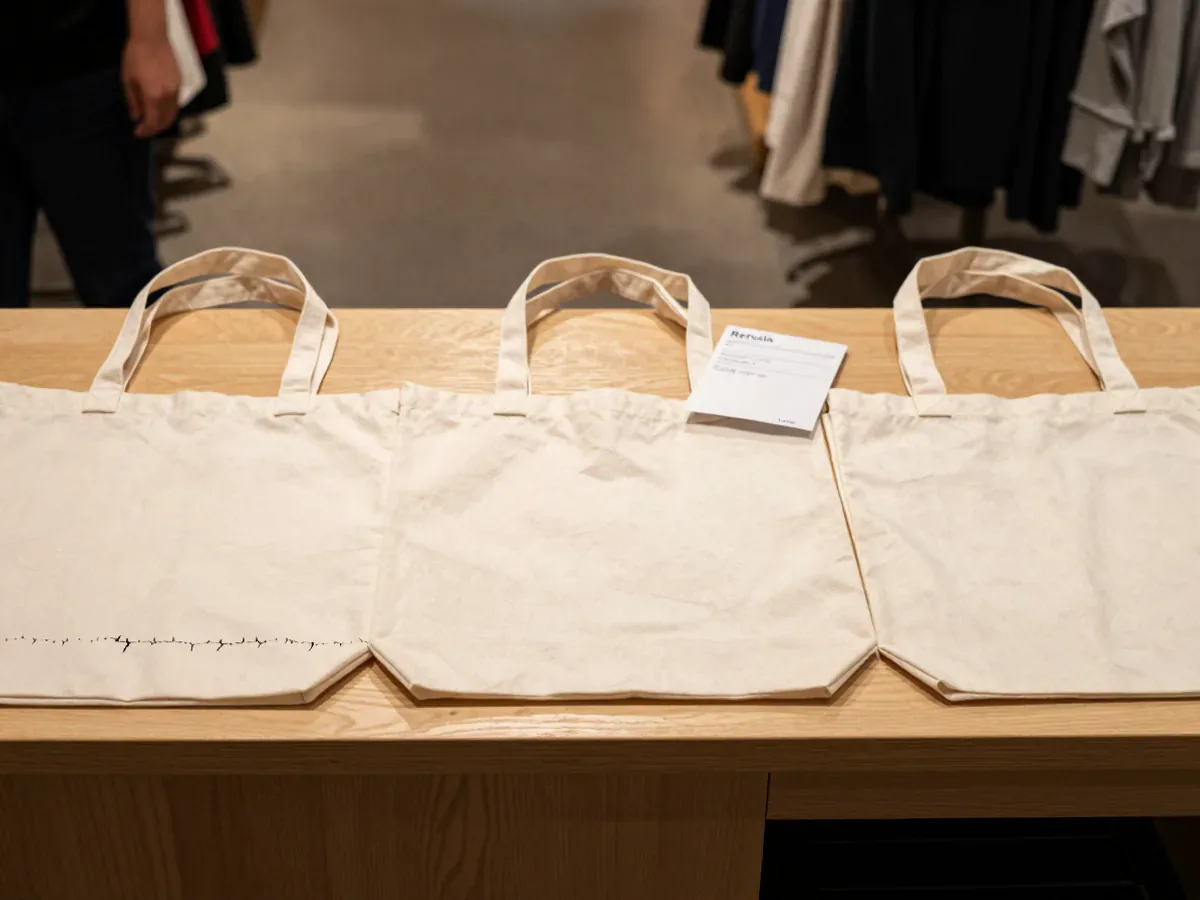
The shop had replaced a heavier canvas tote from an earlier season with a lighter cotton bag, partly to cut freight and partly because the lighter bag photographed better on the shelf. The new bag was specified by weight, handle style and size, with a natural body colour, and the sample looked close enough to the old one that nobody flagged the difference.
At the counter, the difference showed up fast. Customers who had kept the old tote for a year found the new one folding at the base after a few trips. The print on the front panel had also begun to crack along the edge of the logo, which is what the return note mentioned first.
The shop owner's question was simple. Was this a bad batch, or the wrong material for the job? The answer sat in the sample room, in a comparison nobody had run.
What the Customer Noticed Before the Logo

None of the three customers mentioned the logo first. Two mentioned the way the bag hung from the shoulder, and one mentioned that the fabric felt thinner than expected for the price of the purchase. The logo crack came up only when the shop owner asked directly.
That order of complaints matters. A boutique bag is the only advertising the customer carries home, down the street, and onto social media, and the first thing anyone notices is how it carries, not what it says. A bag that sags or slips off the shoulder gets retired to a cupboard before the print has a chance to work.
The carry problem traced back to the handle specification. The shop had chosen a woven handle on a light cotton body, and the combination pulled the top edge out of shape once the bag held anything heavier than a folded scarf. A webbing or rope handle on the same body would have distributed the load differently, but the handle had been picked for looks rather than for the weight it would carry.
Where the Print Detail Went
The artwork was a small wordmark with a thin rule underneath, set in a serif face. On the sample, the rule held. On the production bags, the rule broke into a dotted line on about a third of the units, and the serif edges softened.
Cotton canvas prints crisply in screen print and accepts fine brand detail, which is why it remains the boutique default. The catch is that the print result depends on the weave and the surface under the ink, and a lighter cotton gives the ink less to hold onto than a heavier canvas does. The same artwork that proofed cleanly on the sample cloth behaved differently on the production cloth.
This is the point where material choice and print method have to be decided together. Screen print, heat transfer or a woven label each behave differently across cotton, jute and rPET, and the proofing step exists to catch exactly this gap before production. When the proof is run on a different cloth than the order, the proof proves very little.
The Weight and Handle That Changed the Carry
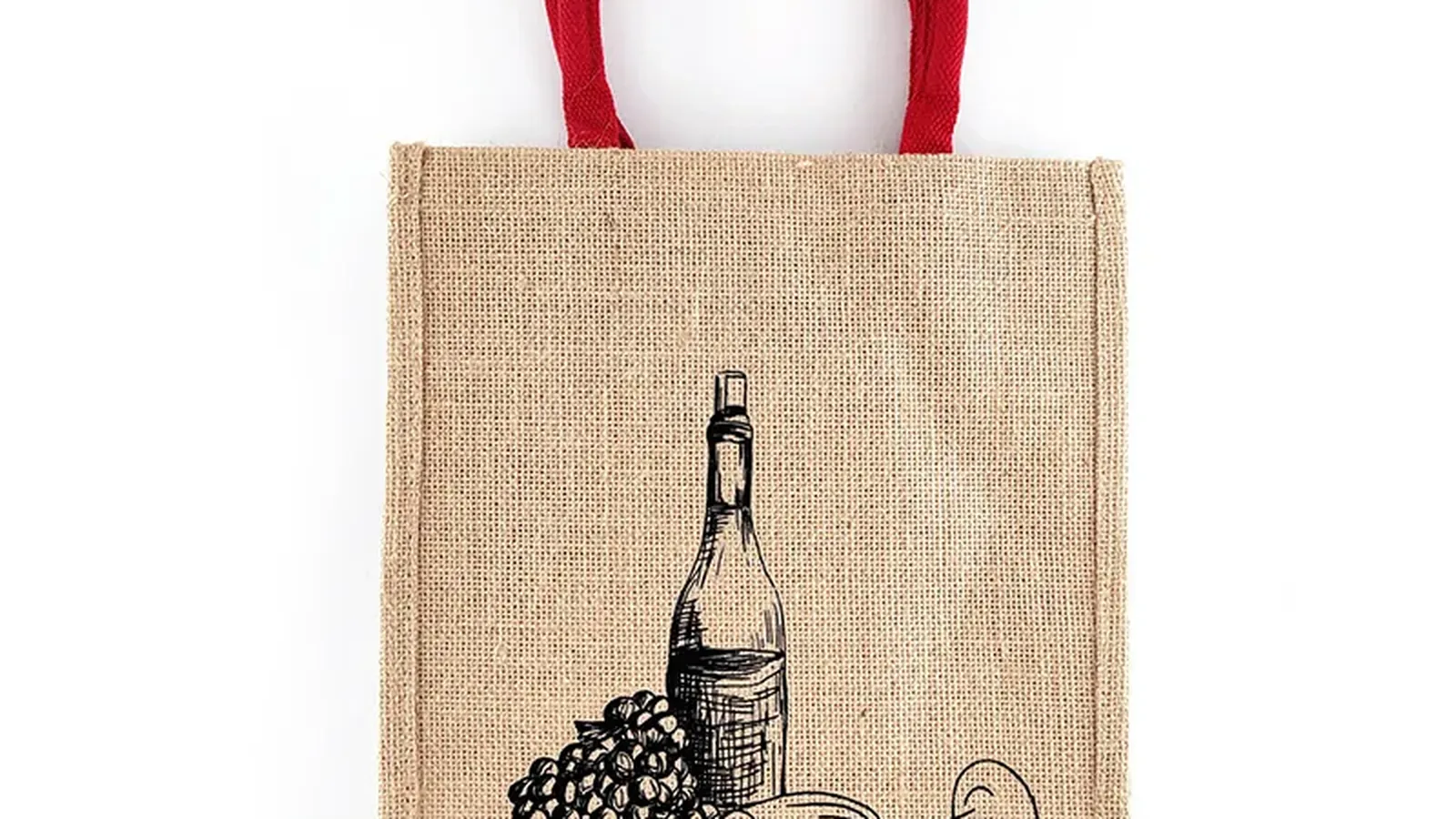
The shop had also considered jute for the same program, and the sample jute bag told a different story. Jute brings a coarse, tactile weave that reads rustic and honest, and it held the bold part of the logo well. The thin rule, though, disappeared into the weave, because jute's open surface limits fine lines and rewards simple, heavy marks.
The jute bag also carried differently. It stood up on its own when set down, which customers liked, but the same open weave that gave it texture made the handle attachment points the first place to show wear. A jute bag needs its handle reinforced at the seam, and the pull and seam strength of every batch is the check that catches a weak attachment before it reaches a counter.
The third sample was rPET, woven from recycled bottles on the same construction as the other two. Its surface is smooth and behaves like polyester, so it accepted the full artwork including the thin rule, and it resisted water in a way the natural fibres did not. The trade was in hand feel. Customers who picked it up described it as practical rather than warm, which is a fair description of what the material is.
The Sustainability Claim the Shop Could Not Back Up
The shop had printed a line about recycled content on its website before the bags arrived, and a customer asked for the paperwork behind it. Nobody at the shop could produce it, because the claim had been written from the material name rather than from a document.
Recycled content is a chain, not a word. The standard that documents that chain from bottle to bag is what eco-literate customers and regulators ask for, and a supplier who cannot show it leaves the claim exposed. The same discipline applies to the natural fibres. Jute grows fast with modest inputs and biodegrades, which is a strong story, and organic cotton answers cotton's footprint at a premium. Both beat virgin synthetics on the natural-materials axis, but only if the shop can say which version it bought.
A boutique does not need a sustainability essay on the bag. It needs one sentence it can defend when a customer asks, and that sentence has to match a document the supplier can send.
Three Materials, One Artwork, Three Samples
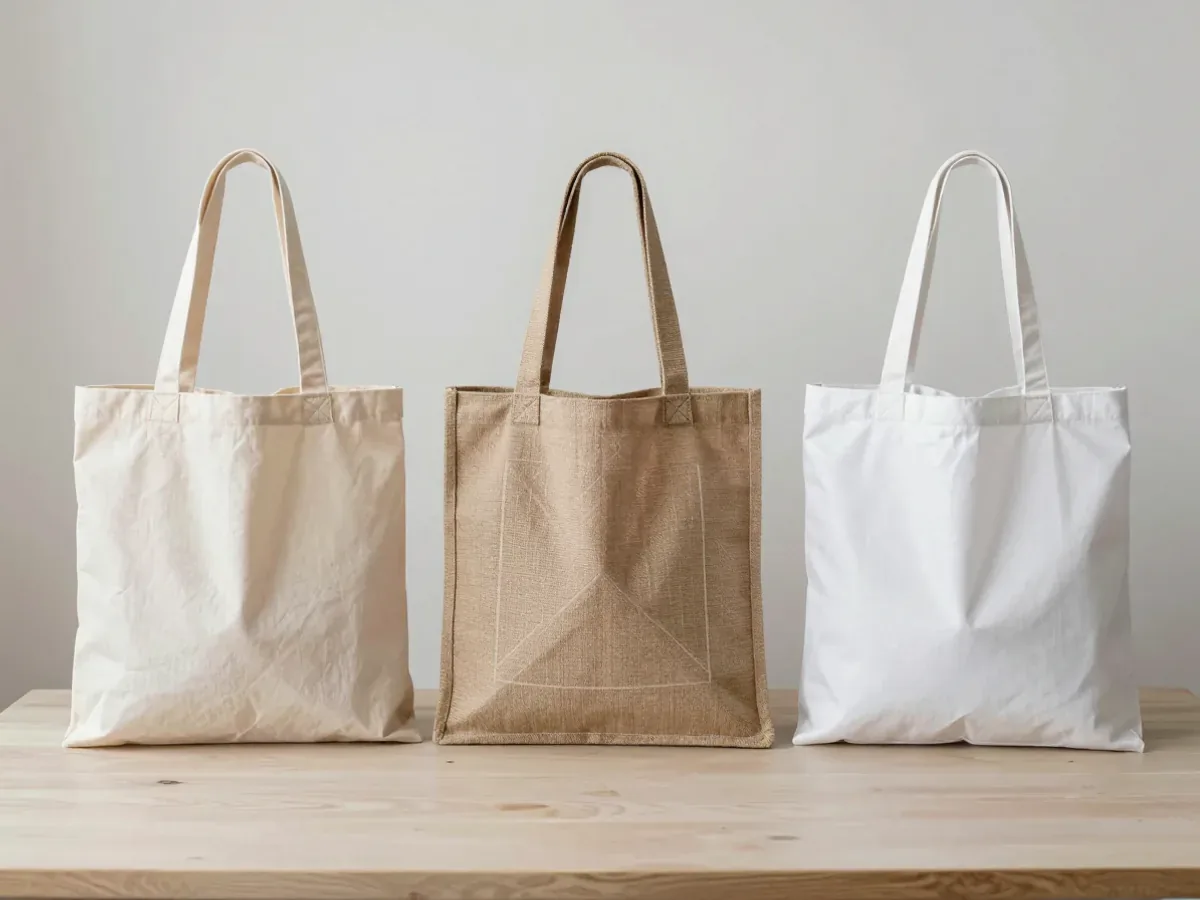
The fix was a three-material sample comparison against the shop's own artwork, run before the next program order. The same wordmark and rule went onto cotton canvas, jute and rPET, and the three bags came back side by side with the print, the handle and the body weight all visible at once.
That comparison settled the questions faster than any datasheet. The thin rule survived on cotton and rPET and failed on jute. The jute bag won on shelf presence and lost on fine detail. The rPET bag won on print fidelity and water resistance and lost on the warmth customers expect from a fashion purchase. The cotton bag won on hand feel and needed a heavier body and a stronger handle to survive a season of use.
The shop chose two materials rather than one. Cotton canvas carried the main line, specified at a heavier weight with a webbing handle, and jute carried a smaller seasonal run with the logo simplified to a bold mark. The rPET option stayed on the table for a future range where the recycled story had paperwork behind it.
What to Check Before the First Program Order
The returns stopped after the second program, and the reason was not a better material. It was a shorter list of checks run before the order went out.
Start with the artwork and the material together. Decide whether the design depends on fine lines or bold marks, then match it to a surface that can hold it. Ask for the proof on the production cloth, not a stand-in.
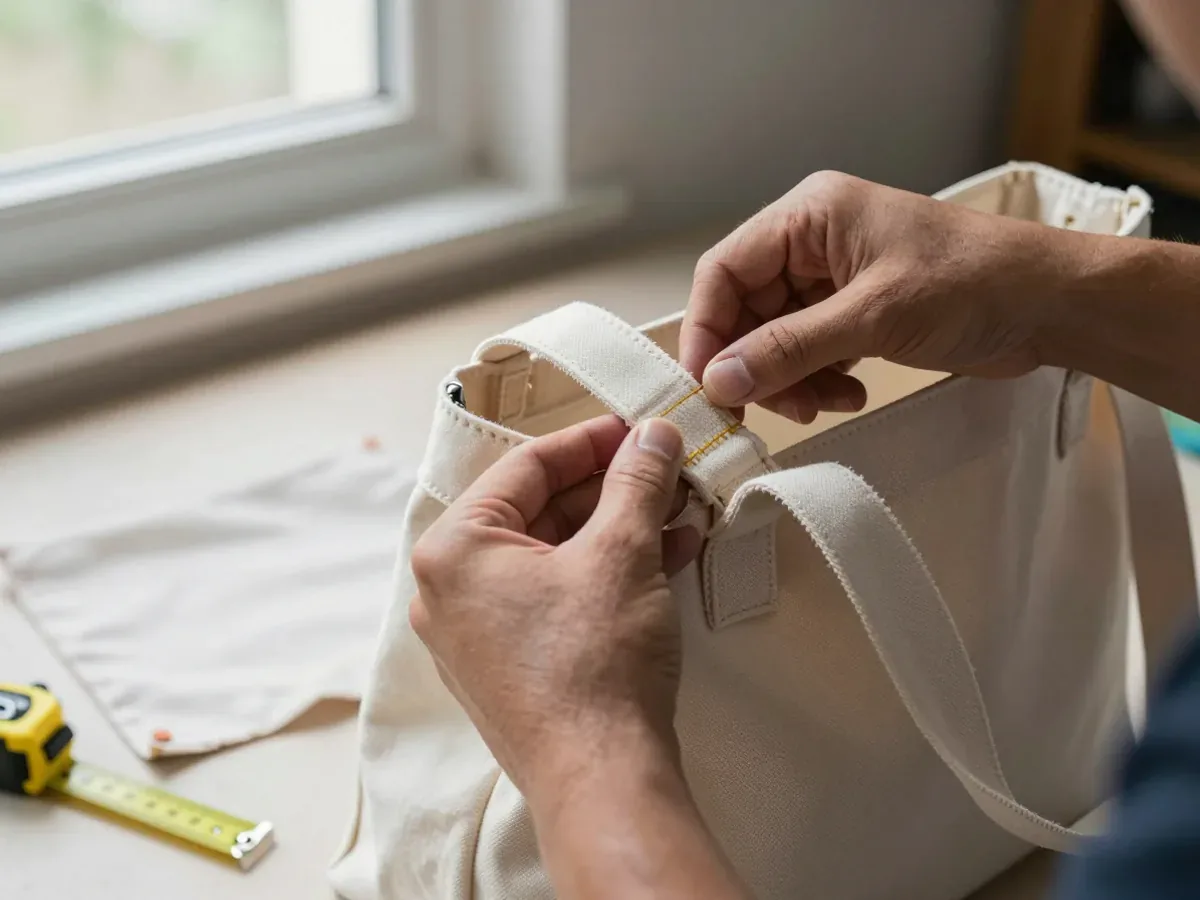
Specify the body by weight, not by name. A cotton bag described only as cotton can arrive at several weights, and the weight decides how the bag carries and how long it lasts. The same applies to the handle: woven, webbing or rope each changes the carry, and the choice should follow the load the bag will hold.
Ask what happens at the seam and the handle attachment. Pull, seam strength and bar-tack tested on every batch is the check that catches the failure a customer would otherwise find. Incoming fabric, webbing, zips and thread checked against the approved spec catches the substitution before it becomes a return.
Confirm the colour route. Stock colours can be swapped for a Pantone match, and a new size takes one sample round, so the schedule should include that round rather than assume it away. Packing should be agreed at the same time, whether polybag, hang tag, retail carton or per-store packing lists, because a bag that arrives in the wrong pack still costs a week.
Finally, ask for the document behind any claim before it goes on the bag or the website. A recycled content claim without the chain behind it is a risk carried by the shop, not the supplier.
None of these checks requires a boutique to become a materials expert. They require the shop to ask for the comparison, read the proof, and keep the paperwork. The bag that came back to the counter would have failed one of these checks in the sample room, months before a customer ever carried it home.
FAQ
Which material prints fine logo detail best for a boutique bag?
rPET and smooth cotton canvas hold fine lines best. Jute's open weave limits fine lines, so bold marks and simple logos work best on it.
Is jute more sustainable than cotton for a branded shopping bag?
Jute grows fast with modest inputs and biodegrades, which is a strong story. Organic cotton answers cotton's footprint at a premium. Both beat virgin synthetics on the natural-materials axis.
What certification should rPET boutique bags carry?
The Global Recycled Standard documents the recycled content chain from bottle to bag, which is what eco-literate customers and regulators ask for.
Which material is cheapest at program volume for boutique bags?
Jute typically prices lowest, rPET sits mid-range, and heavier cotton canvas costs most per unit, offset by the longest keep-and-reuse life.
Can a factory compare cotton, jute and rPET against our own artwork?
Yes. A factory supplying all three materials will produce sample comparisons against your design, which settles print quality and hand feel faster than any datasheet.