



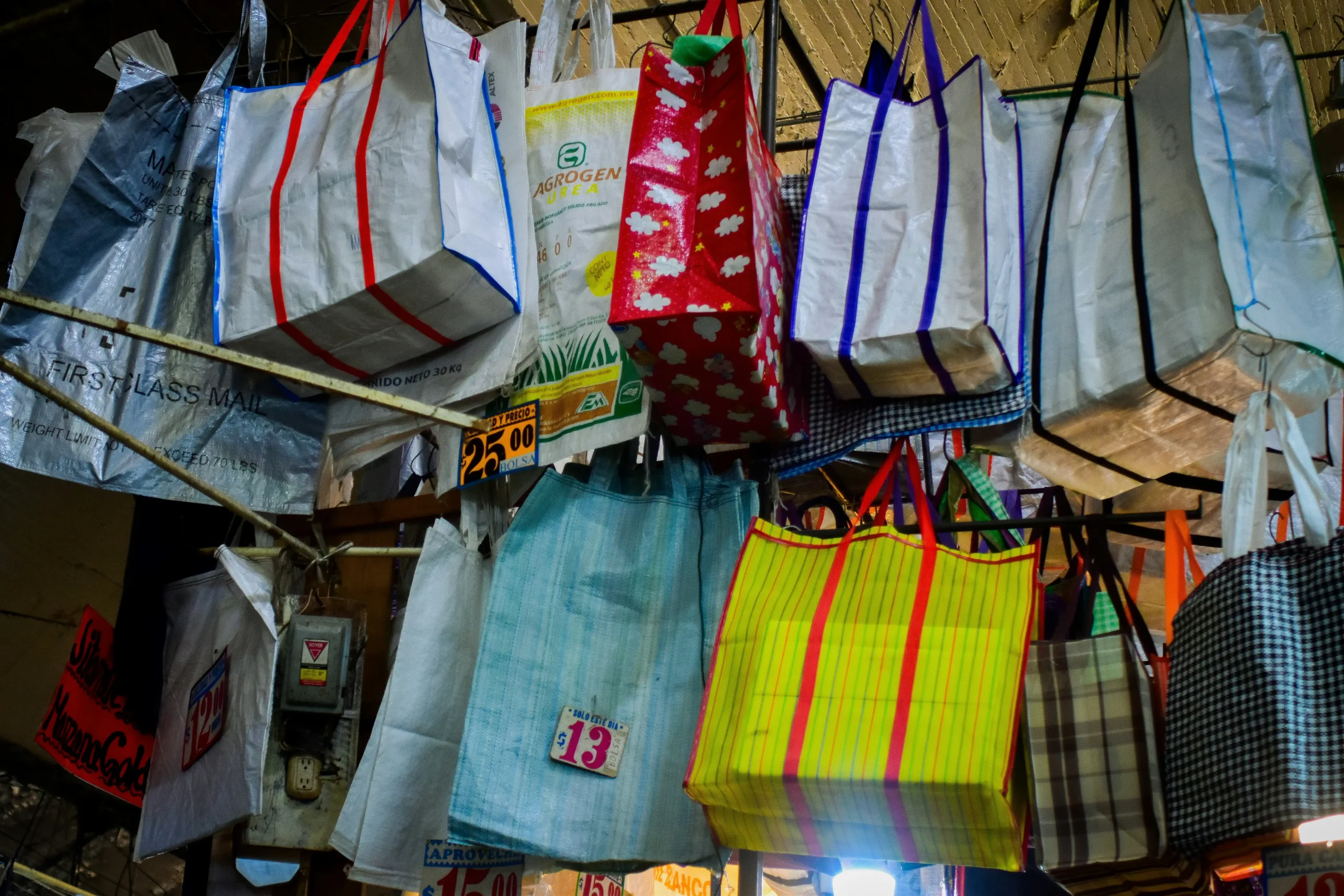
I saw a Reddit thread last week where a customer was furious because United Airlines destroyed the handle system of their brand new bag, and as a DTC packaging lead, you know that post is your worst nightmare. Most buyers walk right into this trap by shopping bag MOQ pricing tiers like they are buying office supplies, ordering 5,000 units at $1.20 each to hit the bottom price bracket. You think you saved the budget, but you just bought a public relations disaster when those cheap handles snap on the first baggage carousel, leaving you with dead stock and a damaged brand perception that no ROAS calculation can fix.
We pulled three years of our factory production data to show you exactly where suppliers hide the real costs, from the $500 gravure plate fees that drain your startup cash flow to the one-inch custom size adjustments that instantly kill your Tier 1 pricing. You will walk away knowing how to negotiate a 500-unit pilot run that actually looks and feels like a premium order, keeping your inventory turnover rate high and your brand reputation off social media.
Defining MOQ Tiers for Retail Bags
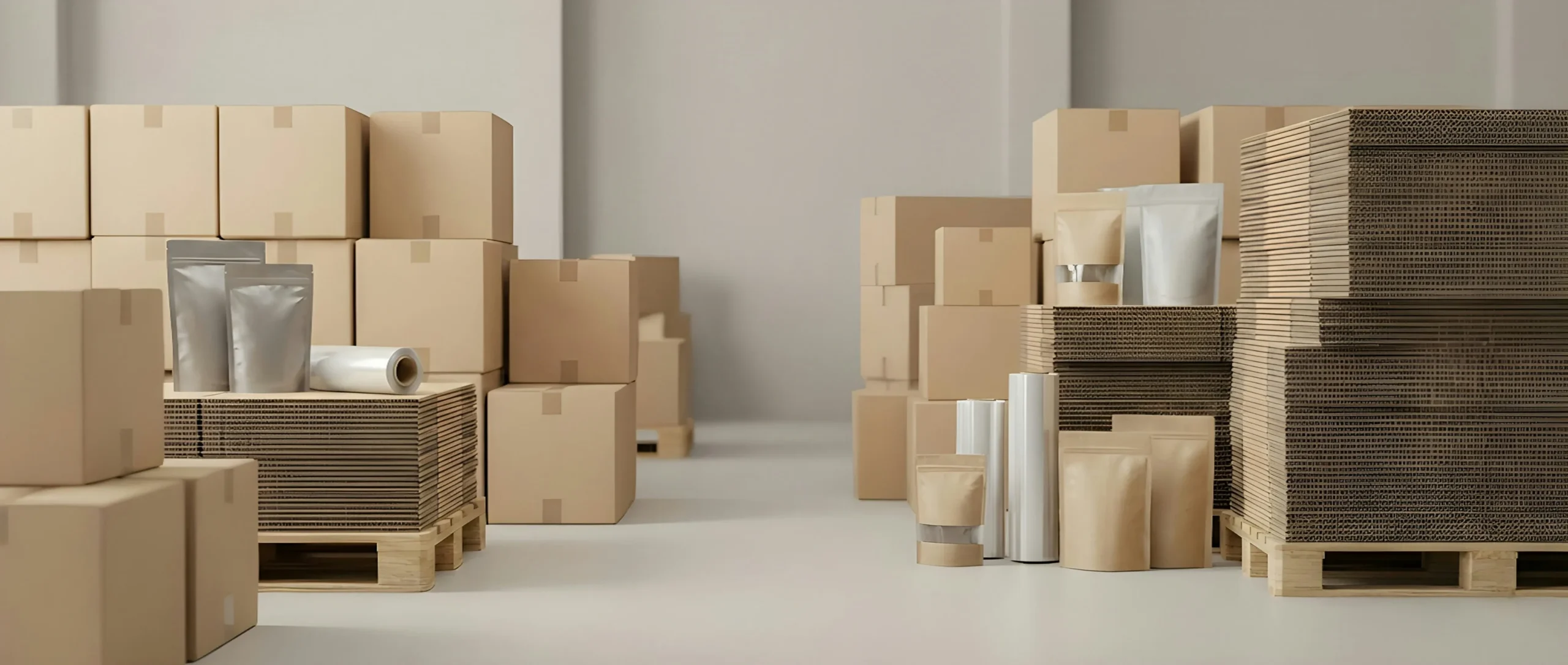
MOQ tiers dictate your print method, material specification access, and whether your packaging investment drives ROAS or becomes dead stock sitting in a warehouse.
The Three Tiers: What Actually Changes Beyond Quantity
Most DTC packaging leads assume MOQ is simply “how many bags do I need to order.” That is incorrect. The tier you select determines the entire manufacturing process chain. At the Stock tier (50-500 units), you are buying pre-made blanks with digital heat transfer applied on top. The base material is fixed, the dimensions are fixed, and the handle system is whatever the factory had tooled for bulk orders. This is the exact category of bag that fails under airline baggage handling stress — generic handle systems riveted to standard poly weave with zero reinforcement at stress points.
The Semi-Custom tier (500-2,000 units) shifts you into specifiable territory. You gain access to material selection (100gsm to 280gsm non-woven PP, or 600D to 1680D polyester), custom color matching via Pantone, and — importantly — handle system upgrades like cross-stitched nylon webbing or rigid insert handles. The print method typically moves to screen printing or digital hybrid processes, meaning you can achieve a custom look without committing to gravure plate tooling. RPET recycled material becomes available at this tier, though it carries a roughly 20% premium over virgin PP.
Fully Custom (3,000+ units) means rotogravure printing, custom cutting dies, and full material specification. You own the tooling. The unit economics compress aggressively here, but the cash outlay and lead time (typically 45-60 days post-plate approval) make this a risky first move for a DTC brand still validating product-market fit.
Price Per Unit: The Real Cost Comparison
Here is the financial breakdown that most factory quotes obscure by hiding setup costs in the fine print:
- Stock Tier (50-500 units): $4.50/unit. Zero setup fees for digital print, but no material customization. You are paying a 275% premium per unit for the privilege of low volume.
- Semi-Custom (500-2,000 units): $2.80-$3.20/unit. Screen print setup runs $80-$150 per color. Using digital hybrid printing on orders under 1,000 units eliminates plate fees entirely, saving $800+ in upfront cash — a direct lever for DTC cash flow management.
- Fully Custom (3,000+ units): $1.20/unit. Gravure plate costs hit $500 per color. At this volume the per-unit savings absorb the setup cost within the first order, but you are locking $3,600-$6,000 into non-refundable tooling before a single bag ships.
The gap between $4.50 and $1.20 is not a “discount” — it is the manufacturing economics of amortizing fixed setup costs across larger runs. According to Packaging Digest’s DTC packaging analysis, brands that jump straight to 5,000-unit orders without validated design often sit on 30-40% dead stock within two quarters.
Semi-Custom as the DTC Launch Sweet Spot
The math for a DTC brand at launch phase points decisively to the 500-2,000 unit Semi-Custom tier. You get specifiable materials — and this matters because the difference between a 120gsm non-woven PP and a 1680D polyester weave is the difference between a bag that survives a moving truck and one that tears at the seam on its first load. At stock tier, you cannot specify this. You accept whatever the factory’s default run uses.
There is a second advantage most buyers miss: the “Golden Ratio” hack. Most factories maintain cutting dies for standard dimensions (15×18 inches, 18×20 inches). Requesting a custom one-inch deviation triggers a new die charge of $500 or more, which functionally pushes you into Fully Custom territory for pricing. By designing your bag around existing die sizes, you access Semi-Custom material and print options at Stock-tier tooling costs.
The strategic play is straightforward. Run 500-1,000 units with digital hybrid printing (no plate fees, full color), spec 1680D polyester with reinforced handle stitching, and use standard die dimensions. Your cost lands around $2.80-$3.20 per unit. You preserve cash flow, avoid the dead stock trap of a 5,000-unit commitment, and ship a bag that performs under real-world stress rather than folding like the generic stock bags that get destroyed in transit.
Material Costs vs. Volume Tradeoffs
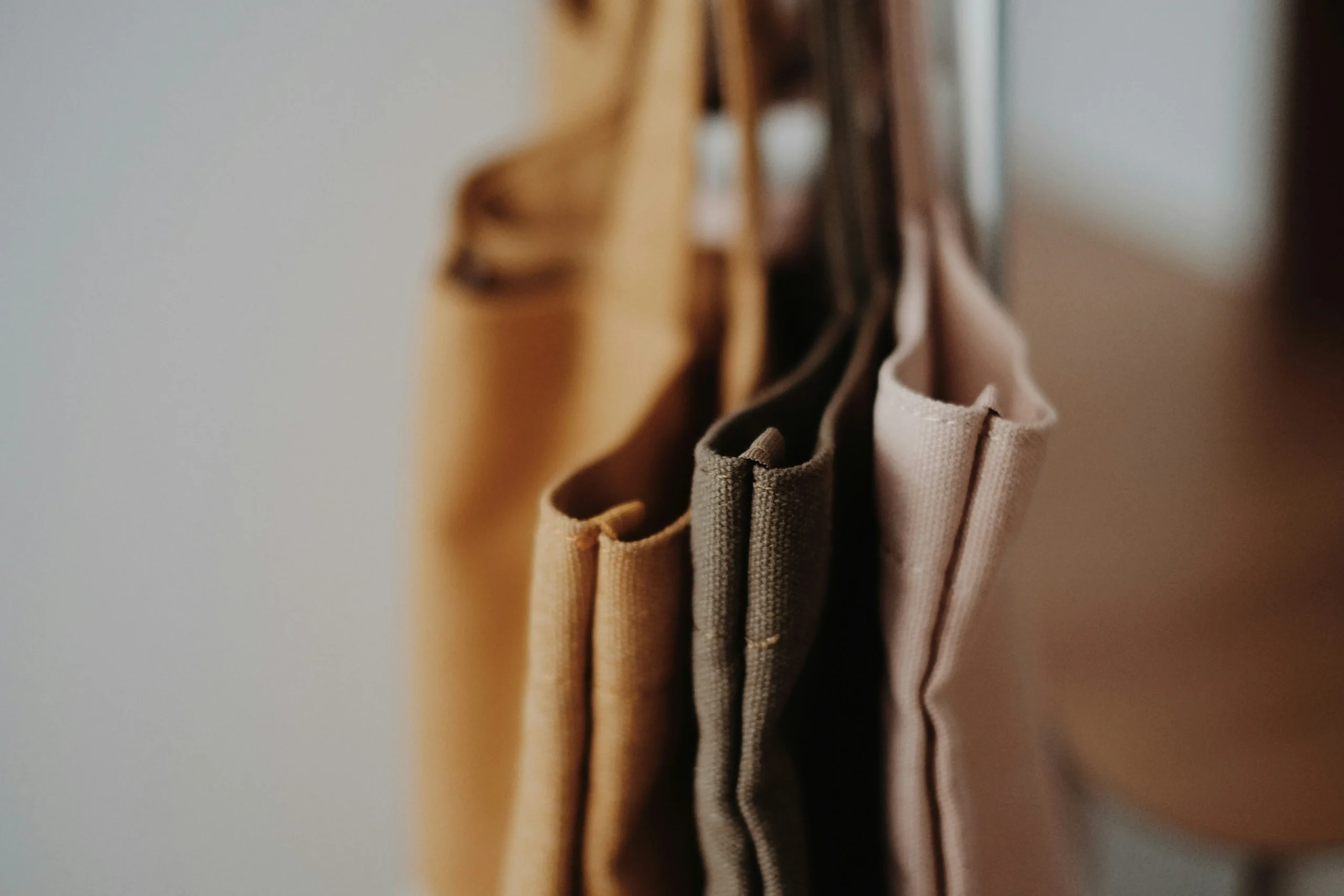
Material choice does not just change your unit price — it directly sets the floor for your minimum order quantity. Choosing the wrong GSM-material combination is how DTC brands end up sitting on 3,000 units of dead stock.
How GSM and Material Type Dictate Your MOQ Floor
Most DTC buyers assume MOQ is a fixed factory policy. It is not. MOQ is a function of production line calibration efficiency, and the material you select determines how long that calibration takes. A 120gsm PP woven bag runs through a standard heat-sealing line at high speed with minimal tension adjustment. That efficiency is why we can offer a 1,000-unit MOQ on this spec.
Switch to 280gsm cotton canvas and the physics change entirely. The fabric density requires slower feed rates, reinforced needle plates, and a completely different thread tension profile. The setup time alone makes runs under 3,000 units financially irrational for the factory — not because the material is scarce, but because the machine downtime per usable output becomes unacceptable. If a supplier offers you 500 units of 280gsm cotton canvas, either the unit price will be inflated to cover that downtime, or they are batching your order with another client’s run and you have zero control over color consistency.
The RPET Surcharge: What $0.15 to $0.30 Actually Costs You at Scale
Switching from standard virgin PP to recycled RPET adds a $0.15 to $0.30 per-unit surcharge. At our factory’s baseline, that translates to roughly a 20% increase over virgin PP. The reason is straightforward: RPET requires an additional pelletizing and extrusion step where post-consumer PET bottles are cleaned, shredded, melted, and re-spun into filament. According to the Textile Exchange’s latest RPET market analysis, recycled PET filament consistently commands a premium over virgin due to fragmented collection logistics and variable flake quality.
Here is the math that matters for your CFO presentation. At a 1,000-unit pilot run, that $0.25 average surcharge adds $250 to your total order. At 5,000 units, it adds $1,250. The question is not whether RPET is “worth it” in the abstract — it is whether your customer acquisition cost and retail price point can absorb that premium without compressing your ROAS below break-even. For a DTC brand selling a $60 insulated bag with a target 4x ROAS, a $0.25 material uplift is invisible. For a $12 promotional drawstring bag, it kills the margin entirely.
Avoiding the Cash Trap: Matching Material Tier to Pilot Volume
The single most expensive mistake a DTC packaging lead makes is specifying a premium material at a low volume. Our internal data shows the unit price variance between 500 units and 5,000 units spans from $4.50 down to $1.20. That 3.75x price gap is almost entirely driven by setup amortization — the gravure plate fees, the machine calibration hours, the material waste during the first 50 test units.
The strategic move is to decouple your material choice from your brand ambition at the pilot stage. Run your first 1,000 units in 120gsm PP with digital hybrid printing — which eliminates the $500 per-color gravure plate fee entirely. Validate the size, the handle strength, and the customer response. If your inventory turnover rate confirms demand, scale to 5,000 units in RPET or cotton canvas where the per-unit economics actually make sense. Premium materials reward volume. They punish hesitation.
One additional lever most buyers ignore: dimensional standardization. Factories keep cutting dies for sizes like 15×18 inches and 18×20 inches. Requesting a custom dimension — even a one-inch deviation — triggers a new die charge of roughly $500, which functionally raises your effective MOQ. Sticking to standard factory dimensions lets you access Tier 1 volume pricing at Tier 2 order quantities, with full customization reserved for the print and handle hardware rather than the bag silhouette.
| Volume Tier | Material Spec | Cost Profile | Durability Rating | Brand Risk Mitigation |
|---|---|---|---|---|
| Pilot (500 Units) | Virgin PP (100gsm / 600D) | $4.50/unit (Digital Hybrid: $0 setup) | Standard Load Capacity | Avoids 5k-unit dead stock; high risk of handle/system damage during rough transit |
| Pilot (500 Units) | RPET Blend (150gsm / 800D) | $5.40/unit (+20% RPET surcharge, $0 setup) | Moderate Tear Resistance | Eco-premium positioning at pilot scale; protects brand perception without bulk cash outlay |
| Scale (5,000 Units) | Virgin PP (180gsm / 1200D) | $1.20/unit (+$500 Gravure plate fee) | High Load Capacity | Optimizes Cost Per Acquisition; withstands standard moving/logistics wear to protect ROAS |
| Scale (5,000 Units) | Reinforced Poly/Kevlar-Weave (280gsm / 1680D) | $1.85/unit (+$500 Gravure plate fee) | Industrial-Grade Tear Resistance | Eliminates catastrophic airline/mover baggage damage; ensures zero negative brand comments |
Hidden Costs in Production Setup
A supplier quoting $1.20/unit on 5,000 bags is irrelevant if their setup fees consume your entire pilot-run budget before a single unit ships.
Gravure Printing Plates: The $500/Color Silence Fee
Most DTC buyers evaluating bag MOQ pricing tiers focus entirely on the unit price and miss the upfront cost structure entirely. Traditional rotogravure printing requires a physical cylinder for every color in your design. The industry standard runs $200 to $500 per color. A seemingly simple three-color logo suddenly becomes a $900 to $1,500 non-refundable line item on your first invoice—before manufacturing even starts.
This is where the cash trap hits hardest. You budgeted for a 500-unit pilot run at $4.50 per bag, totaling $2,250. Add a $1,200 plate fee and your actual cost per unit jumps to $6.90. Your CPA math collapses. We route orders under 1,000 units through Digital Hybrid Printing, which eliminates plate fees entirely. The per-unit print cost is marginally higher, but you save $800+ in upfront cash outlay—a tradeoff that makes sense when your volume trajectory is unproven.
Mold Fees: The $1,000+ Custom Hardware Penalty
Custom hardware—molded zipper pulls, reinforced handle grips, or branded buckle systems—requires dedicated steel or aluminum tooling. A single custom mold for a rigid handle base starts at $1,000 and can exceed $3,500 for multi-component assemblies. These fees are almost never amortized into the unit price by default. The factory charges them as a separate “tooling deposit” on your proforma invoice.
The workaround most factories will not volunteer: standard component substitution. We maintain an internal library of existing molds for common hardware profiles—D-rings, triglides, and webbing handles in standard configurations. If your design intent is aesthetic rather than strictly proprietary, selecting from existing tooling drops your mold fee to zero. If you must have a proprietary shape, that cost becomes real, and it changes the math on what MOQ actually makes financial sense.
Lab Testing Charges: The $300 Compliance Gate
If your bags will be sold in California or distributed to consumers in the U.S., Prop 65 compliance for lead and phthalate content is not optional. Third-party lab testing for a full phthalate panel and heavy metal screening typically runs $300 per material component submitted. A bag with a PP body, a polyester lining, and a PVC zipper pull means three separate material tests—$900 before you receive a compliance certificate.
We pre-qualify our base materials through annual batch testing, which means repeat buyers using our standard 100gsm to 280gsm RPET or virgin PP constructions do not pay per-order testing fees. The $300 charge only triggers when a buyer introduces a new substrate or hardware component we have not previously certified. According to the California Office of Environmental Health Hazard Assessment, enforcement actions frequently target small brands that skip this step entirely—making the $300 test far cheaper than the $2,000+ settlement baseline for a first-time notice of violation.
Negotiating Amortized Tooling: Lowering Initial Cash Outlay
The standard factory approach is to bill 100% of mold and plate costs on the first order. For a DTC brand testing a new product category, this front-loads all financial risk onto the buyer. The alternative is to negotiate amortized tooling: the supplier absorbs the mold cost and recovers it incrementally across a agreed-upon volume commitment, typically 10,000 to 20,000 units spread over multiple production runs.
Here is how the structure actually works in practice. You commit to purchasing 15,000 units across four orders over 12 months. The factory waives the $2,500 mold fee upfront but adds a $0.17/unit tooling surcharge to every invoice until the full $2,500 is recovered. On your first 500-unit pilot run, you pay $85 in tooling amortization instead of $2,500 in cash. If you cancel after the first run, contractually you owe the remaining balance—but operationally, most factories will not pursue a $2,000 claim from a U.S. entity over a disputed pilot run. It is an imperfect mechanism, but it solves the immediate cash flow problem that kills most DTC pilot programs before they launch.
| Setup Element | Traditional Trap | Strategic Alternative | Financial Impact |
|---|---|---|---|
| Print Method Setup | Gravure plates at $500/color buried in unit quotes. | Digital Hybrid Printing for orders under 1,000 units. | Eliminates $800+ upfront cost, preserving cash flow and lowering merch CPA. |
| Custom Dimensions | A custom 1-inch size change triggers a $500 cutting die fee. | The ‘Golden Ratio’ Hack: use standard factory cutting dies (15×18, 18×20). | Secures Tier 1 unit pricing with Tier 2 customization, preventing dead stock. |
| Material Upgrades | Unquoted +20% premium for RPET over Virgin PP destroys budgets. | Specify industrial-grade denier (600D-1680D) for true load capacity. | Prevents brand damage from cheap bags that fail like airline-destroyed luggage. |
| Volume Pricing Tier | Pricing variance from $4.50 (500 units) to $1.20 (5,000 units) forces bulk buys. | Negotiate semi-custom pilot runs using standard specs. | Optimizes Inventory Turnover Rate by avoiding the 5,000-unit cash trap. |

Negotiating Lower MOQs Without Quality Loss
Factories set MOQs to recover fixed setup costs, not to protect unit margins. Remove the setup cost, and the MOQ drops with it.
Why “Golden Standard” Sizes Bypass the Die Charge Entirely
Most factories maintain cutting dies for a narrow set of “golden standard” dimensions—typically 15″ x 18″ and 18″ x 20″ totes—because these sizes move in volume across hundreds of clients annually. When a DTC brand requests a custom dimension like 16″ x 19″, the factory must commission a new steel cutting die, which runs approximately $500 per size. That die fee either gets amortized into your per-unit price or billed upfront, effectively forcing you into a higher MOQ just to make the unit economics work.
The workaround is to design your packaging around existing die dimensions. Your graphic designer can adjust artwork proportions to fit a 15″ x 18″ canvas without any perceptible compromise to the brand aesthetic. You keep the fully custom print, but you eliminate the die charge entirely. This is how you access Tier 1 manufacturing economics at volumes that would normally trigger Tier 2 pricing.
The SKU Consolidation Playbook
Here is where most DTC brands trip up: they order three different bag sizes for three different product lines, each hitting only 500 units. At $4.50 per unit, that is $6,750 tied up in inventory across three SKUs with zero volume leverage. The smarter approach is to consolidate all three product lines onto a single bag body size—say, the 15″ x 18″ standard—and differentiate through print design alone.
By running 1,500 units of one body size with three unique print runs (500 each), you achieve two things simultaneously. First, the factory only sets up one cutting line, reducing changeover waste. Second, you create a unified brand language across your product range rather than a fragmented assortment of mismatched bag sizes. If you are using Digital Hybrid Printing on orders under 1,000 units, the plate fee drops to $0 compared to the $500 per color that traditional rotogravure setup demands—saving over $800 in upfront cash outlay that would otherwise be trapped in tooling.
Hitting the 3,000-Unit Tier While Offering Product Variety
The real leverage point in bag MOQ pricing tiers sits at volume. The data is unambiguous: 500 units costs $4.50 each, while 5,000 units drops to $1.20 each—a $3.30 per-unit reduction that compounds into serious margin recovery. Most DTC brands cannot absorb 5,000 units of a single SKU without triggering dead stock alarms, especially when a failed design means thousands of dollars in warehouse liability. But 3,000 units split across multiple designs on one body size is a fundamentally different risk profile.
The structure works like this: order 3,000 units of the 15″ x 18″ body, split across three print designs (1,000 units each). You are not carrying 3,000 units of one design—you are holding three lean batches of 1,000. The factory sees one production run of 3,000, which pushes you past the steepest part of the pricing curve and well past the 500-unit penalty zone. You avoid the cash trap of buying 5,000 cheap bags that end up sitting in a warehouse, while still extracting meaningful unit cost reduction over the baseline. The $3.30 gap between the 500-unit and 5,000-unit tiers is where your CFO wants you to play—splitting the difference through SKU consolidation rather than blind volume buying.
الخاتمة
Order 500 units using digital hybrid printing to completely bypass the $500-per-color plate fee. Chasing a 5,000-unit order at $1.20 per bag just to lower your unit cost creates dead stock that tanks your inventory turnover. Stick to standard 15×18 dimensions to dodge custom die charges and keep your pilot run under $2,500.
Request a side-by-side quote comparing 500 digital hybrid bags against 1,000 screen-printed bags from your factory rep. Force them to show the total upfront cash outlay, not just the per-unit line item. This specific comparison gives you the exact numbers you need to defend your merch budget to your CFO.
Frequently Asked Questions
What are the various categories of bags?
Categories include tote bags, backpacks, drawstring bags, cooler bags, and duffels. For MOQ purposes, flat totes (no zippers) have the lowest threshold (500 pcs), while complex bags with multiple zippers and liners (backpacks) require higher MOQs (3,000+ pcs).
How much does it cost to manufacture a tote bag?
Manufacturing costs range from $0.80 for a basic 100gsm non-woven bag to $3.50 for a heavyweight 12oz cotton canvas bag. Price is driven by material yield and sewing complexity (e.g., cross-stitching adds $0.15/unit).
What is the order of measurements for a bag?
Standard industry order is Length (L) x Height (H) x Width (W) or Gusset. Always specify if dimensions are ‘body only’ or including handles/straps, as this affects material yield calculations and pricing.
How much profit should you make on a tote bag?
DTC brands typically target a 3x-4x markup on landed costs. If your landed cost is $2.50, the retail price should target $7.50 – $10.00 to absorb marketing and logistics overhead while maintaining healthy margins.
What happens to unsold Louis Vuitton bags?
Luxury brands like LV burn unsold stock to maintain brand exclusivity and value. For DTC brands, this highlights the risk of over-ordering: unsold inventory is a total loss. Start with semi-custom lower MOQs to test demand before committing to full custom runs.


0 تعليقات