



Import Custom Packaging Bags from China: Step-by-Step is the first checkpoint buyers should lock before they approve a supplier, budget, or production slot. Importing custom packaging bags from China isn’t about finding the cheapest factory quote. For a distributor, the real target is a production line that behaves like an extension of your own warehouse — one that doesn’t go dark during peak season and keeps your resale margin intact when freight costs spike. The unit price on a proforma invoice tells you almost nothing. What matters is whether that supplier can ship a container that lands on time, passes a burst-strength test your end customer never thinks about, and doesn’t torch your gross margin with a hidden defect rate.
A 10,000-unit bulk order cuts per-unit cost by 30–50% against a 1,000-piece trial run — that’s table stakes. The competitive moat gets built in the contract clauses most buyers skip. A 3% defect allowance with free replacement, for instance, isn’t a favor; it’s the baseline that stops a single bad container from wiping out the profit on three clean ones. And before you ask about print quality or grammage, ask for an ASTM D5034 burst-strength report. Bags that tear under load don’t generate warranty claims — they generate returns that erode inventory turnover. That’s the metric your spreadsheet actually cares about.

Understanding the Import Opportunity for Custom Packaging
Factory-direct sourcing cuts procurement costs by 30–50%, but the real margin protection sits in defect allowances and co‑op marketing funds.
China controls a 28% share of global packaging exports, outpacing Europe (25%) and the USA (18%). This dominance isn’t about cheap labor—it’s about clustered supply chains in Zhejiang and Guangdong that shorten lead times and lower raw-material costs. When you import tote bags for resale directly from a BSCI‑audited manufacturer, you eliminate the domestic middleman and dictate the quality thresholds, material specs, and replenishment rhythms that align with your warehouse turns. A $200–$300 sample‑making fee is standard, but any legitimate factory credits that amount against your production invoice. Your due diligence costs you nothing in the final P&L—only the mistakes you skip.
- Volume cost curve: Orders of 10,000+ units cut per‑unit cost by 30–50% compared to 1,000‑unit runs. For custom non‑woven totes, 5,000+ units triggers material yield efficiencies and print setup amortization that narrow competitors rarely pass through.
- 3% defect allowance: Professional distributor agreements include a 3% defect allowance with free replacements on the next order. Without it, one container of seam‑split bags erases your entire gross margin on the shipment.
- ASTM D5034 burst test: Bags that fail under load are the #1 cause of return requests. Require burst strength reports in the purchase order and verify them before release. This single clause stops the post‑delivery margin bleed.
- 5% safety stock buffer: Negotiate a 5% overrun on your top 3–5 SKUs held at the factory. It costs you nothing in storage fees and prevents peak‑season stockouts that force your repeat customers to test a competitor.
- 45‑day FOB guarantee: Lock FOB pricing with a contractual 45‑day lead time. Combine it with pallet wrap and corner protectors to keep freight damage claims under 0.5% of shipment value—way below the 2–3% industry average.
- 2% co‑op marketing fund: Ask for a 2% co‑op fund (credited as a discount on your next order) plus free sample kits for your sales reps. This turns the supplier into a silent partner that funds your go‑to‑market motion and accelerates sell‑through.

Step 1: Defining Your Custom Bag Specs and Requirements
One missing test standard can turn a container of bags into a 100% loss.
Most return requests don’t start in the warehouse—they start on your spec sheet. When a bulk shipment of moving bags hits a distributor’s dock and the zippers split on the first use, the failure traces back to a single line item that said “heavy duty” without a measurable load rating. Defining your custom bag requirements with exacting precision is the difference between a product line that turns inventory 6 times a year and one that collects dust while customers demand refunds. Load-bearing seams, grammage, print adhesion, and certification codes are not afterthoughts—they are contract terms that determine landed cost, defect rates, and whether your sales reps can confidently pitch this SKU against domestic alternatives.
- Material and grammage: Specify fabric type (e.g., non-woven polypropylene, laminated PP, rPET) and grams per square meter (GSM). A 90 GSM non-woven tote costs less than 120 GSM laminate, but the thinner bag tears at 50 lbs while your customer needs 85 lbs. If you skip the ASTM D5034 burst strength test requirement, you’re asking for field failures and margin-eating returns.
- Dimensions and load tolerance: Set length × width × height in millimeters with a tolerance of ±5 mm. A bag that technically matches spec can still collapse a retail display if it’s too wide for standard shelving. For logistics buyers, mismatched dimensions mean pallets that don’t stack and cubic volume waste that bloats freight cost per unit.
- Print method and durability: Define whether you need screen printing, CMYK offset, or hot stamping. Require an adhesion test—ASTM D3359 cross-hatch is the minimum for reusable retail bags. A logo that flakes off after three trips turns a premium shopping tote into a negative billboard for your client’s brand.
- Certification and compliance: If you sell into the EU, REACH and RoHS documentation is non-negotiable; customs will hold your container until you produce lab reports. A BSCI-audited factory reduces audit overhead and qualifies your supply chain for corporate ESG programs. For recycled material claims, demand GRS certification certificates with your release sample—not just a verbal promise.
- Defect allowance and safety stock: Embed a 3% defect allowance with free replacement directly into the product specification sheet. Same goes for a 5% overrun on top SKUs. When a supplier signs off on these terms at the spec stage, you’ve filtered out the factories that will ghost you when 2,000 bags arrive with broken handles.
The spec sheet you send to a Chinese factory is not a wishlist; it’s a pre-negotiation contract that eliminates excuses. When you combine material GSM, seam reinforcement requirements, print rub fastness, and a BSCI audit clause into a single technical document, you shift the conversation from “What price can you give?” to “Can you match this exact standard?”. Suppliers who hesitate on ASTM D5034 or push back on the 3% defect allowance are self-disqualifying. That saves you months of sample rounds and the headache of explaining to your warehouse manager why a $12,000 shipment is headed for the dumpster.
Step 2: Vetting Chinese Manufacturers and Factories
Skip any factory that won’t share a third-party burst test report or explain its AQL sampling plan.
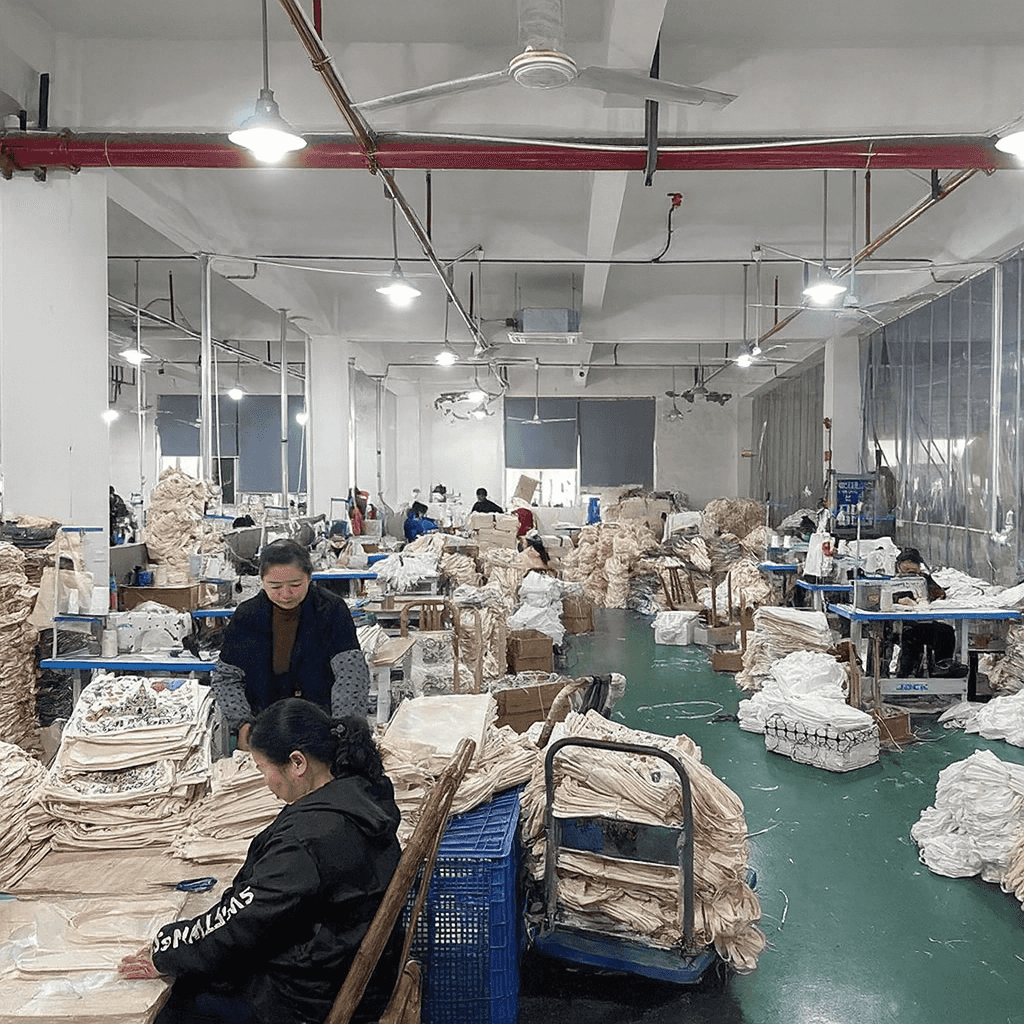
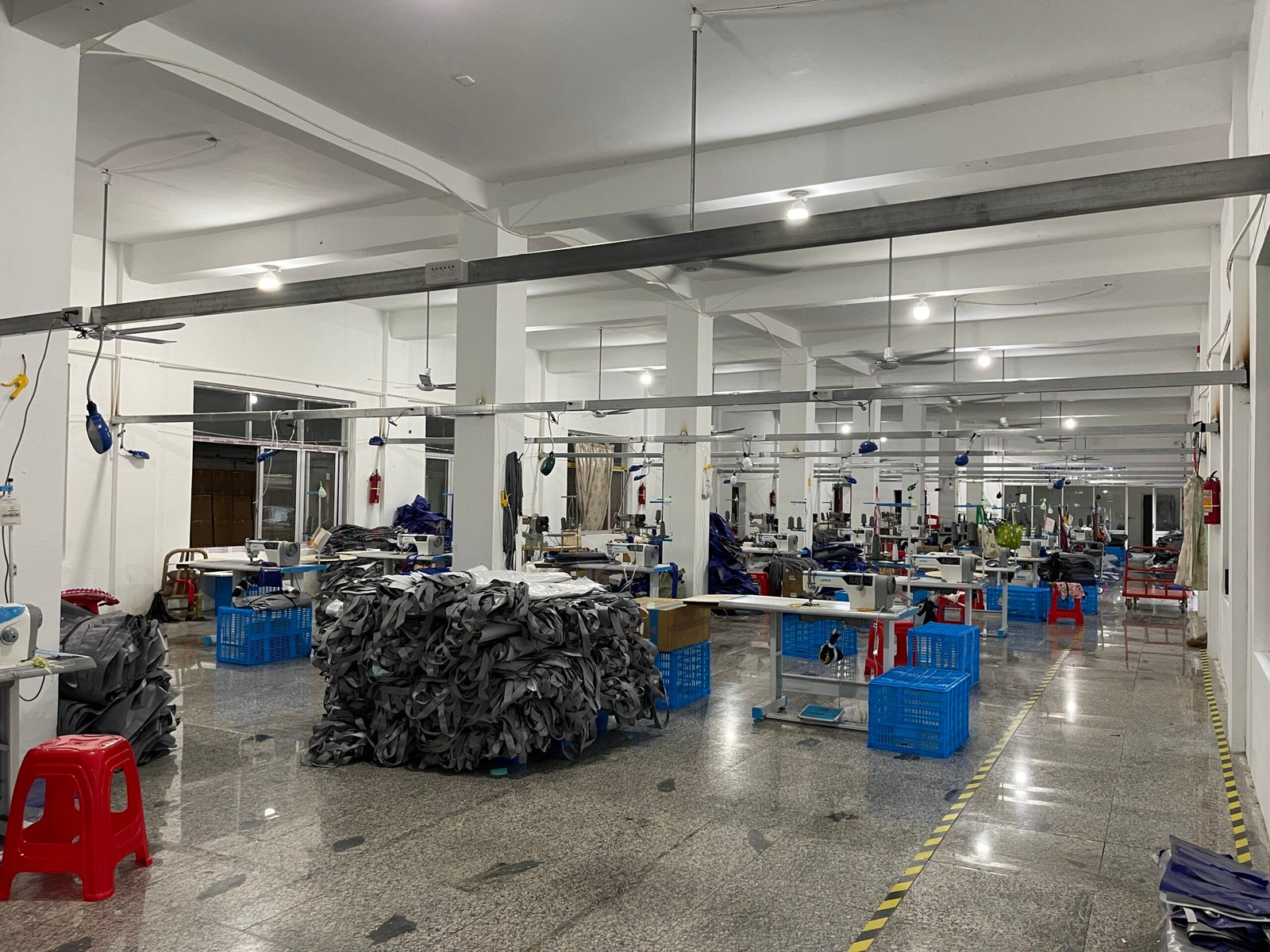
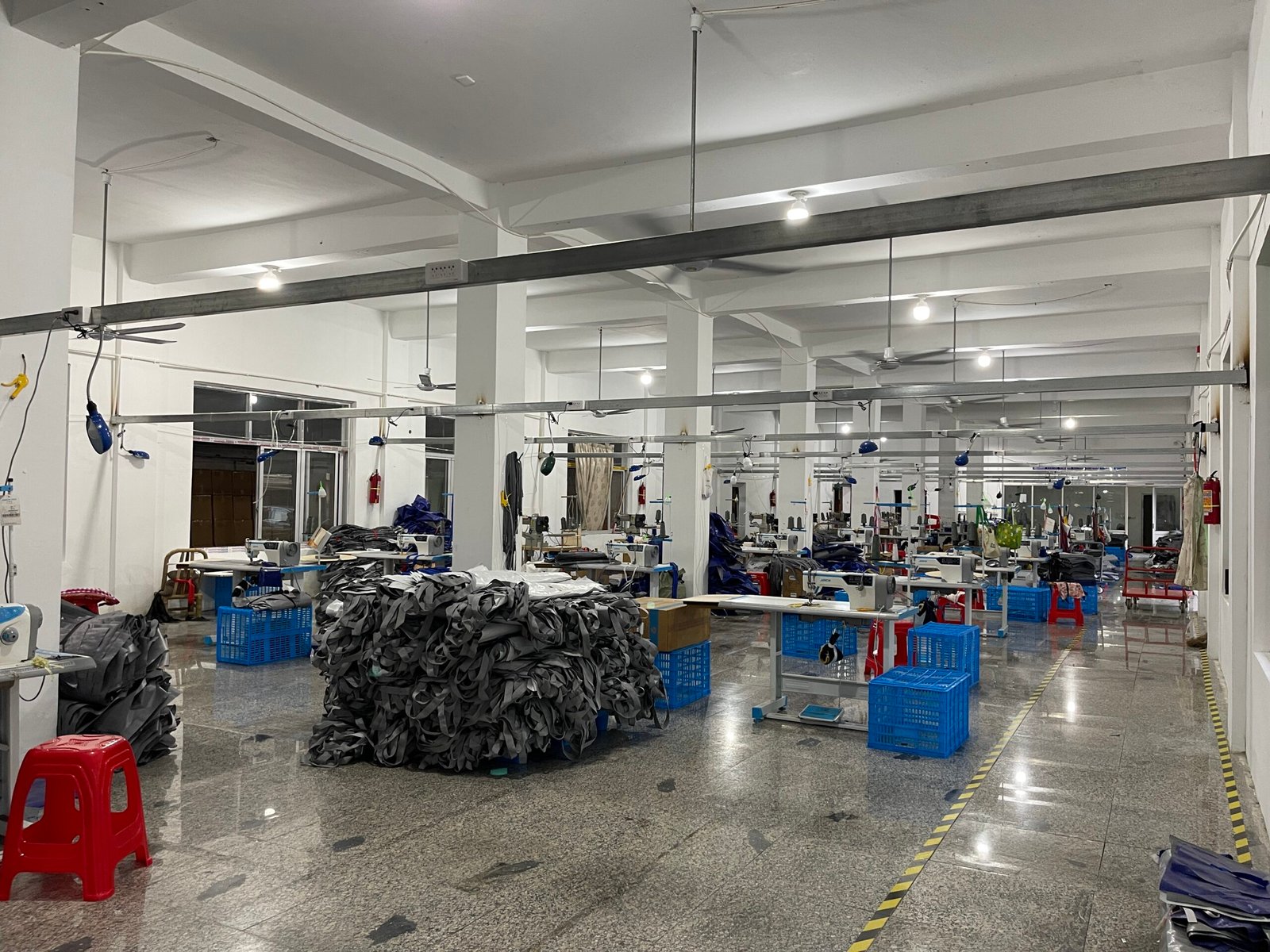
Vetting a Chinese custom bag factory isn’t a paperwork exercise—it’s about spotting which operations run like your own warehouse extension and which are trading companies with a rented showroom. The fastest filter: ask for a 10-minute live video walkthrough. Look at material staging. Roll goods should sit on pallets, not bare concrete, in a sectioned area with humidity control. If sewing lines lack tension testers or operators can’t show you the QC check sheet for the last shift, your repeat orders will fight stitch defects.
- Material staging: Roll goods stored off the ground in a dry, clean zone; contamination here causes print voids and seam failures.
- Sewing QC station: A calibrated tension tester at each line; a visible stop-card authority so operators halt for skipped stitches without supervisor approval.
- Print registration control: Digital overlay or jig alignment keeping multicolor logos within ±1mm; request the current run’s setup sheet, not a stock photo.
- Burst testing bench: Samples pulled every two hours and tested to ASTM D5034; factory should keep a dated log, not just a “we have a lab” claim.
Sample evaluation is not about whether the bag looks nice in your hand. Fill it to its rated load weight—80 lb, 120 lb, whatever you sell—lift it by the handles ten times, then inspect the seam roots. Request the pre-production sample (PPS) and confirm the factory will use the exact same material roll for mass production. The $200–$300 sample fee is standard and must be credited against the bulk invoice. When a factory refuses that credit, they’re signaling they don’t back their own work.
Quality systems have to be contract-grade, not conversational. The industry norm is AQL 2.5 for pre-shipment inspection; require the factory to supply its own in-line and final inspection reports, not just a third-party certificate. Certifications like BSCI or ISO 9001 are table stakes—demand the most recent audit report, not the wall plaque. A BSCI score below C means corrective actions are outstanding; you can’t afford to be the buyer who discovers that during a container unpack.
Lock in the 3% defect allowance with free replacement before you cut a sample PO. Discuss it during the vetting call and watch the reaction. Factories that push back usually know their in-process scrap rate can’t hold tolerance. If they agree but won’t put it in the proforma invoice, walk. A single container with 5% stitching failures can erase your margin on the entire SKU line.
Step 3: Pricing, MOQ, and Payment Terms for Bulk Orders
Skip middlemen: 30–50% unit cost reduction kicks in at 10,000+ units.
Factory-direct pricing isn’t a straight line — it’s a staircase. At 1,000 units you’re paying the entry price, enough to test the market but barely worth the freight hassle. Push to 5,000 and the cost per bag drops 15–20%. Cross 10,000 units, and you’re looking at a 30–50% reduction versus the 1,000-unit rate. That’s not a guess; it’s pure manufacturing economics: longer machine runs, less changeover downtime, and raw material bought in full-ton lots.
When negotiating, pin the supplier on a clear tiered pricing table locked for 12 months. Don’t accept vague ‘prices depend on market rates’ language. You need hard breakpoints: 1,000 / 3,000 / 5,000 / 10,000 / 20,000+ pieces. If they balk at a 12-month commitment, at least lock 6 months and get them to absorb material fluctuation within a 5% band. Your own customers won’t tolerate surprise price hikes mid-year, so neither should you.
- 1,000 Units MOQ: Highest per-unit cost. Suitable for market testing and first production validation.
- 5,000 Units: Swing point where per-bag cost drops 15–20% as the factory runs a full shift without changeover.
- 10,000+ Units: 30–50% unit cost reduction kicks in. Bulk material pricing and optimized production flow apply.
- 20,000+ Units: Additional margin negotiation room, but focus shifts to container utilization and warehousing costs.
Now, the defect allowance: If your contract doesn’t contain a minimum 3% defect allowance with free replacement, you’re gambling your margin on every shipment. A 40-foot container can hold 80,000 custom tote bags. Without a defect clause, even a 1.5% rate — bags with off-registration print, torn seams, or wrong grammage — means 1,200 unsellable units. At a landed cost of $0.80 each, that’s $960 wiped off your bottom line. And those bags become your problem, not the supplier’s. A 3% defect allowance with free replacement is the baseline. Some veteran distributors negotiate 5% on first two production runs until the factory proves consistency. The replacement units must ship with the next container at the supplier’s cost, not yours.
Payment terms: 30% deposit with order placement, 70% balance before shipment is standard for new relationships. After three successful runs, you can push for 30% deposit, 70% against copy of bill of lading — this shifts responsibility for shipping delays back to the factory. Letters of credit aren’t worth the banking fees for orders under $30,000. Just verify the supplier’s bank details match their business license, and never wire to a personal account.
Two overlooked negotiation levers that separate amateur buyers from pros: First, demand a 2% co-op marketing fund — credit against your next order that funds your sales team’s samples, catalogs, or trade show costs for this new bag line. It aligns the supplier with your sell-through speed, not just your buy volume. Second, request free sample kits (15–20 pre-production samples with full print and material swatches) for your sales reps. Most factories charge $200–$300 for samples and claim they’ll credit it later. Skip that dance and get the samples zero-charge up front by committing to a trial order minimum. Your sales reps can’t sell what they can’t show.
Finally, attach an ASTM D5034 burst strength test report to every production lot. You don’t need to explain textile mechanics to your customers, but you do need the report ready when a commercial moving company calls claiming your bags ripped under a 150-lb load. If the bag passed 200-lb burst strength on the tested sample, the problem is misuse, not manufacturing. That single report has saved more reseller relationships than any other piece of paper in this business.
Step 4: Production, QC Inspections, and Pre-Shipment Checks
Never take delivery without locking in a 3% defect replacement clause and AQL 2.5 sampling.
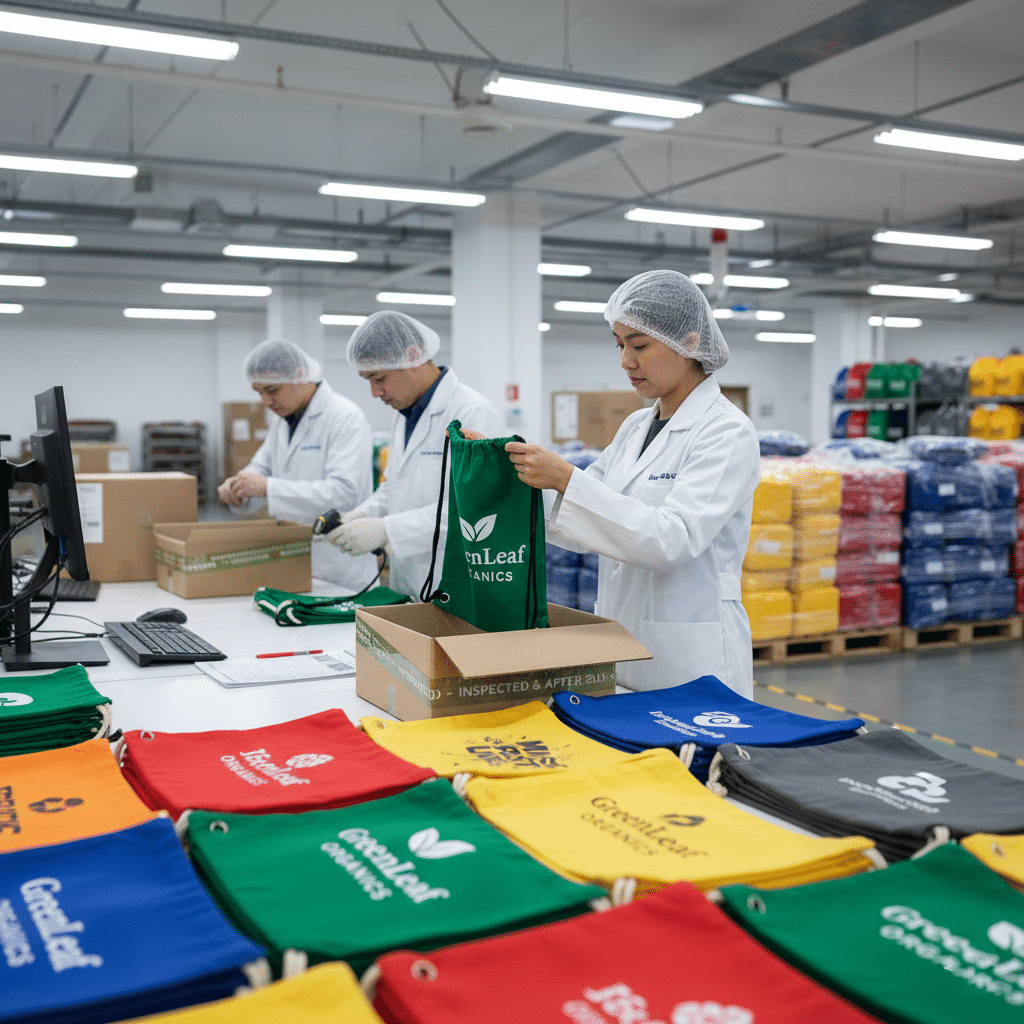
Once the deposit clears and production starts, the gap between a profit-making container and a warehouse full of returns is measured in millimeters of seam strength and grams of fabric weight. Inline QC isn’t optional—it’s the only mechanism that catches needle breaks, ink starvation, or seam misalignment before a shift produces 2,000 defective units. The factory you choose must run at least three inline checks: one at cutting (to verify panel dimensions match your spec sheet within ±3mm), one after printing (to confirm CMYK registration and logo placement), and one after stitching (seam tensile pull test on random samples every 45 minutes). If the supplier cannot describe their inline checkpoints in detail during an audit, walk.
- AQL 2.5 Sampling: Per ISO 2859-1, sampling level II for pre-shipment inspection. This means pulling 200 pieces from a 5,000-unit lot. Accept zero critical defects, 2.5% major (broken zipper, seam pop >2cm), 4.0% minor (loose thread tail under 3mm). Demand the inspection report with photos before wire transfer of balance payment.
- ASTM D5034 Burst Test: Require a fabric-level burst strength report, not just a seam slip test. For high-grammage non-woven or laminated totes, minimum 60 psi burst strength is non-negotiable. If the supplier hedges with ‘tear resistance’ numbers, they’re hiding low-burst fabric. End-customer returns spike when a bag rips from the side panel under 40-lb load.
- Defect Allowance & Free Replacement: Contractual 3% defect allowance with free replacement, not just a credit memo. A single 40HQ container with 4% damaged bags erases the margin on the entire order. Specify: replacements shipped with next order freight prepaid, or if urgent, shipped air express at supplier cost.
Overrun policy is the lever distributors overlook. Most factories will casually mention ‘plus or minus 5%’ in the P/I. Flip that into a hard negotiation: lock overrun at 3% maximum above your order quantity, and demand that overruns be sold to you at 50% of unit price. The factory already accounted for fabric waste and machine setup in their costing; overruns are a pure profit grab if left unchecked. At 10,000 units, a 5% uncontrolled overrun adds 500 pieces you didn’t forecast, tying up warehouse shelf space and cash. At 3% with half-price purchase, you gain 300 units at high margin—a tactical buffer for rush orders from top accounts.
Safety stock isn’t about trusting the supplier. It’s about insulating your own inventory turnover. Top SKUs—usually the 3 sizes that make up 60% of your revenue—need a 5% safety stock buffer held at your warehouse or your supplier’s bonded facility. Negotiate this into the production run: the supplier produces 5% extra of your top SKUs and holds them under your label, ready to ship within 7 days of a reorder trigger. The cost is the inventory carrying charge (roughly 1.5% of unit cost per month in a Chinese bonded warehouse, versus 3-5% in a US 3PL), but it prevents a 45-day gap that hands your customer to a competitor. Build a reorder trigger at 4 weeks of cover. When stock dips below that, the buffer ships automatically without a new production cycle.
Step 5: Freight, Customs, and Last-Mile Logistics
Getting freight wrong erases your factory savings faster than any competitor’s price cut.
Most distributors fixate on the ex-works unit cost and ignore what happens between the factory gate and their warehouse dock. That gap is where margins go to die. Sea freight from Shanghai to US West Coast ports runs 20–40 days; air freight cuts it to 7–12 days but costs 4–6x more. If your landed cost calculation doesn’t account for demurrage, customs bond fees, and last-mile pallet breakdown charges, you’re budgeting fiction. Start every negotiation by locking the Incoterm that gives you control over your freight forwarder. Without that, you’re paying someone else’s markup on shipping and losing visibility on transit damage claims before they even reach your files.
- FOB (Free On Board): You own the goods once they cross the ship’s rail at the origin port. You control freight, insurance, and customs brokerage. This gives you leverage to negotiate volume rates with forwarders and consolidate partial loads from multiple suppliers. The downside: you bear risk if a container gets rolled or a customs hold adds storage fees. Experienced distributors always choose FOB—they’d rather have a $500 demurrage bill they can see coming than a DDP invoice where the supplier buried $2,000 in hidden handling surcharges.
- DDP (Delivered Duty Paid): The supplier handles everything to your door, including import duties. It sounds convenient. It works until you realize the supplier’s logistics partner chose the slowest vessel for their profit margin, palletized your 100g non-woven retail totes with 40kg compression straps that crush the bag faces, and charged you $0.18/unit more than market rate for customs clearance. For first-time importers testing a small batch, DDP removes the learning curve. For distributors running repeat orders above 5,000 units, it’s a margin leak. Ask for a line-item DDP breakdown if a supplier insists on it. If they refuse to show the freight and duty components separately, walk.
- Pallet Spec to Enforce: Demand 3-layer corner protectors (not single-layer cardboard) and edge board thickness of at least 3mm. Photograph the pallet build before the container is sealed. Factories that resist sending pallet-load photos are hiding sloppy stacking.
- Damage Claim Protocol: File a claim with your freight forwarder within 3 days of delivery. Photo-document every damaged carton with the shipping label visible. A supplier with a 3% defect allowance and free replacement (as covered in Step 3) should ship replacements within 7 business days, not after a 6-week ‘investigation.’ If they delay, pull their defect allowance from the next invoice deduction—this is why your contract must explicitly allow debit notes for freight damage that the supplier’s poor palletization caused.
Air freight deserves a specific mention not because it’s fast, but because it’s the only lever that saves you from a 45-day stockout during peak season. When one of your top three SKUs—say, a heavy-duty woven moving bag with reinforced webbing handles—drops below 2 weeks of safety stock and ocean freight won’t land replenishment for 30 days, a partial air shipment of 1,000 units keeps your B2B customers from defecting to a competitor’s catalog. The math: air freight adds roughly $0.40–$0.65 per unit for a 200g bag. Losing a commercial moving company account that buys 20,000 units annually because you couldn’t deliver costs far more. Pre-negotiate an ‘air freight emergency clause’ with your factory. A supplier who can pivot 500 units to air within 72 hours without charging a punitive ‘expedite fee’ is worth an extra $0.02 on your standard unit cost.
Palletization is the most overlooked damage-prevention tool in bag importing. Most suppliers default to loading loose cartons into a container. Those cartons shift. Corner boards buckle. Bottom-layer boxes get crushed by the weight of 5-meter-high stacks. The result: 2–5% of goods arrive with crease marks, scuffed print, or torn poly-bagging that makes them unsellable to your retail clients. Your written purchase order must specify: heat-treated pallets (ISPM 15 compliant), corner protectors on every pallet, full stretch wrap with a minimum of 5 revolutions, and a ‘do not double stack’ instruction unless the bottom pallet’s compression strength has been load-tested above 1,000 kg. This isn’t over-specification. It’s the difference between receiving a pallet of ready-to-sell inventory and receiving a pallet of warranty claims.
Last-mile delivery inside your home market is where many distributors discover their landed cost calculation was missing $0.12–$0.25 per unit. If you’re importing a 40-foot container of custom printed laminated totes, you need a receiving warehouse with a dock-height door, a pallet jack, and the labor to break down pallets and check SKU-level quantities within 48 hours. If you outsource to a 3PL that charges $4.50 per pallet for breakdown plus $0.35 per unit for inspection, bake that into your margin forecast from day one. Better yet, negotiate with your freight forwarder for direct-to-your-warehouse delivery with a drop-trailer agreement, which eliminates the lift-gate fee and gives you 24 hours to unload without detention charges. That single clause saves $250–$400 per container and moves your landed cost per unit into profitable territory on orders below $5,000 total value.
Step 6: Receiving, Warehousing, and Repeat Orders
Receiving isn’t receipt—it’s your first inventory audit and your last chance to reject a bad batch before it hits your warehouse.
When that container arrives, you aren’t just unloading boxes—you are validating that the landed cost per unit, the defect allowance you negotiated, and the production spec you approved all survived the ocean crossing. Distributors who treat receiving as a box-ticking exercise bleed margin through missed damage claims and defective inventory that reaches their customer. The first 24 hours after delivery determine whether the container’s contents become profitable inventory or a write-down.
Inventory management for moving bags and totes requires a different lens than small consumer goods. Your success metric isn’t storage cost per square foot; it’s inventory turnover rate and gross margin per pallet. A pallet of heavy-duty bags that sits idle for 90 days is costing you real money—calculate your holding cost as a percentage of landed cost, and set turnover targets by SKU.
- Landed Cost Per Unit: Break down product cost, freight, duty, and port fees per unit. Update this quarterly; a 3% defect allowance shifts your real cost per sellable unit. Track actual defect rate during receiving to adjust forecasting.
- Actual Defect Rate vs. Contracted 3% Allowance: Random-sample pallets immediately using AQL 2.5. If 100 bags pulled reveal 4 or more major defects, you trigger a claim before inventory mixes into your warehouse. A single container where the factory missed spec can turn a 40% GM SKU into a loss.
- ASTM D5034 Burst Strength Spot Checks: Even if pre-shipment QC passes, test the strength of bags from random pallets. An end-customer return because a bag fails under load costs you far more than the cost of the bag—it costs you repeat sales.
- Sell-Through Rate by SKU (First 30 Days): Monitor which print/color combinations move fastest. This data powers your reorder trigger and helps you avoid tying up cash in slow-moving designs.
- 2% Co-op Marketing Fund: Negotiate this upfront. A supplier that credits 2% of order value toward your local marketing materials (flyers, ad banners, digital ads) is co-investing in your inventory velocity. This reduces your customer acquisition cost for the bag line.
- Dedicated Production Capacity Window: A supplier that gives you a recurring 3-week production slot each quarter acts like your own production line. This prevents peak-season bidding wars for capacity, especially around Q4 when retail packaging orders spike.
- Quarterly Business Review with Cost-Out Ideas: A real partner proposes material substitutions that lower landed cost without sacrificing specs. Ask for a quarterly review that includes fabric gram-weight optimization or carton reconfiguration to reduce freight.
Reorder triggers are not guesswork. If your supplier works on a 45-day lead time from FOB port and sea freight to your warehouse adds 25 days, your reorder point must account for 70 days of forward coverage. Build a 5% safety stock buffer on top of forecasted demand for top 3 SKUs—this is cheap insurance against a production delay. Set an alert when inventory dips to 60 days of projected sales, not when you’re down to your last pallet. The most profitable distributors don’t reorder reactively; they tie the reorder trigger to a live ERP feed that flags SKU-level depletion.
When the reorder clockwork runs, you stop chasing suppliers and start running a predictable income stream. A supplier that provides free sample kits for your reps, consistent batch quality backed by BSCI-audited processes, and DDP logistics with pallet wrap and corner protectors isn’t just a vendor—it’s a competitive advantage. The distributors who outlast the price-cutters are the ones who engineer their supply chain to eliminate stockouts, not the ones who negotiate the cheapest invoice.
Conclusion
This six-step framework turns bag importing from a supply risk into a repeatable cost advantage. Locking in ASTM D5034 burst test documentation, a 3% defect allowance, and a 5% safety stock buffer removes the biggest reasons distributors lose repeat business during peak seasons. You get a production engine that mirrors your own warehouse throughput, not an order taker.
As you finalize specifications for your next product series, compare print samples and material swatches on the custom retail packaging capabilities page. Solidifying gram weight, color accuracy, and recycled material options now prevents costly rebranding downtime later.
Frequently Asked Questions
Is it safe to import packaging bags from China?
Yes, when you source through audited factories and follow standard QC protocols. Risk drops sharply once you verify on-site certifications like BSCI and hold a third-party pre-shipment inspection. Always secure a factory audit report and lab test before final payment.
What is the MOQ for custom packaging bags?
MOQs often start at 500–1,000 units per design, driven by material and print setup. Trial orders at higher unit cost can bypass strict MOQs where needed. Confirm MOQ only after you finalize material and print specs.
How long does shipping take from China for bulk packaging bags?
Sea freight door-to-door typically takes 45–60 days; air freight is 5–7 days but cost-prohibitive for heavy-duty bags. Plan around sea for sustainable margins. Always align your lead time with the shipment method your margins can support.
How can I reduce import costs on packaging bags?
Use FCL, EXW/FOB terms, and sea freight to cut overall spend; volume discounts typically kick in around 5,000 units. Air freight kills savings on heavy bags. Always calculate total landed cost per bag, not unit price alone.
Do I need certifications for packaging bags imported from China?
Yes, for EU/US markets: BSCI factory audits and REACH or Prop 65 compliance are essential to clear customs and satisfy buyers. These cut hold risks and validate safety. Request the latest audit report and test cert before committing.

0 Comments