




Choosing between PP (Polypropylene)1 and PE (Polyethylene)2 is a critical decision when selecting materials for products like shopping bags, storage solutions, or industrial applications. While both are types of plastic, their differences in terms of structure, properties, and applications can impact product performance. This article will explore the key distinctions between these two materials, helping you make a more informed choice based on your needs.
Snippet paragraph: PP is a more rigid and heat-resistant material, while PE is more flexible, moisture-resistant, and chemically stable, making both useful for different applications.
Both materials are widely used across industries such as packaging, automotive, textiles, and consumer goods. However, understanding their differences in terms of physical properties and uses can help businesses select the right material for a particular purpose. Let’s explore how they differ in greater detail.
What is the Difference Between PP and PE Material?
Both Polypropylene (PP)3 and Polyethylene (PE)4 are thermoplastics, meaning they can be heated, molded, and reused without undergoing any significant chemical changes. However, their molecular structure, physical properties, and common uses vary, which impacts their suitability for different applications.
Snippet paragraph: Polypropylene (PP) is stiffer and more heat-resistant than Polyethylene (PE), which is more flexible and resistant to chemicals.
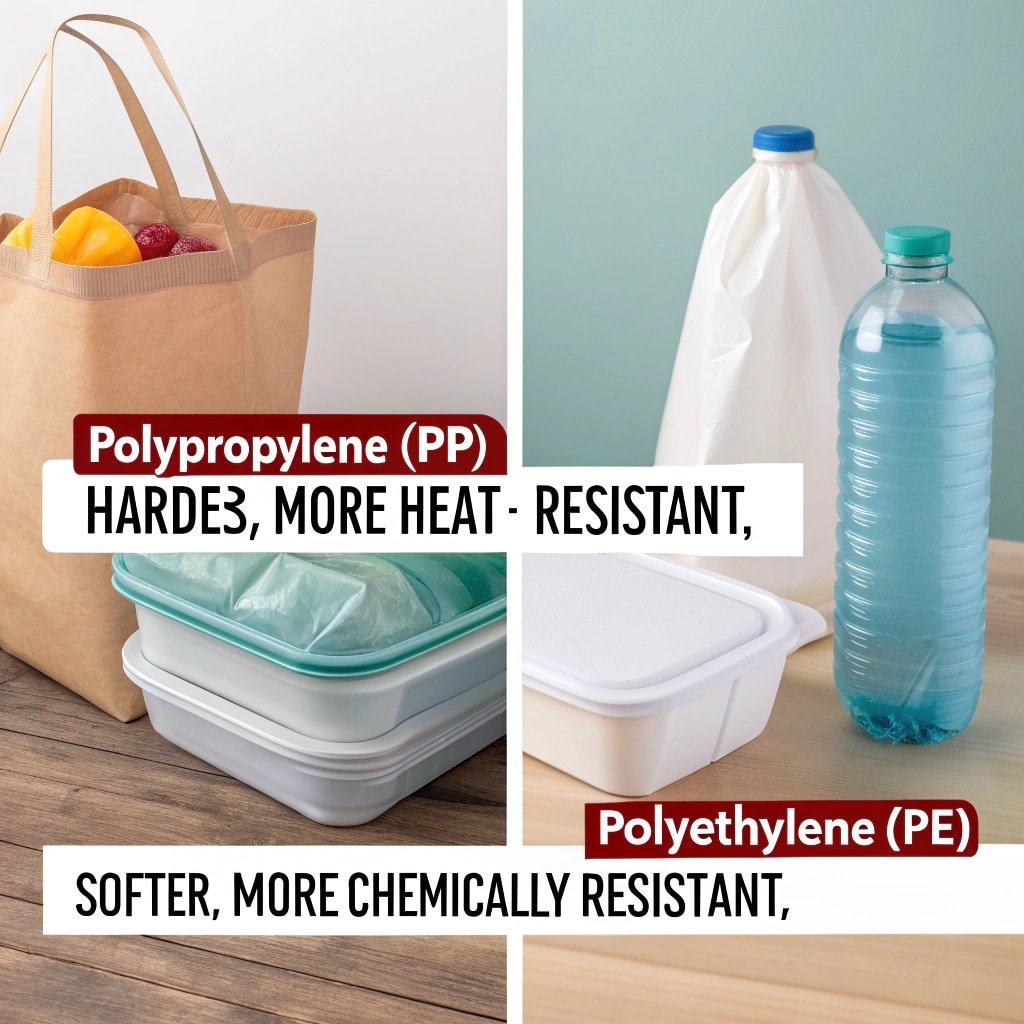
Molecular Structure and Density
-
- Structure: PP has a crystalline structure, giving it more rigidity. This makes it suitable for applications where shape retention and strength are critical.
- Density: It has a higher density compared to PE, which contributes to its stiffer nature.
- Flexibility: Due to its crystalline structure, PP is less flexible than PE but more heat-resistant.
- Applications: Commonly used in packaging for food and industrial products, automotive parts, and household items like storage containers and furniture.
-
- Structure: PE is composed of long chains of ethylene monomers that are less crystalline and more amorphous, contributing to its greater flexibility.
- Density: PE has a lower density, which makes it lighter and more pliable.
- Flexibility: It is far more flexible than PP, making it ideal for products that need to bend, fold, or stretch, such as plastic bags and flexible wraps.
- Applications: Often used in plastic bags, films, bottles, and insulation, PE is especially valued for its flexibility and ease of processing.
Durability and Temperature Resistance
-
Polypropylene (PP):
PP has a higher melting point (around 160°C) compared to PE, making it suitable for applications that need to withstand higher temperatures. This characteristic makes PP more durable in environments subject to heat or where products may come into contact with high-temperature materials. For example, it’s used in hot food containers, microwaveable packaging, and automotive parts like bumpers and dashboards. -
Polyethylene (PE):
PE’s melting point is lower (around 120°C), which limits its use in high-temperature environments. However, this lower melting point gives PE advantages in applications that require flexibility and resilience to environmental stress. PE is often used in applications exposed to chemicals, moisture, and cold temperatures, such as food packaging, plastic wraps, and waterproof coatings.
Chemical Resistance
-
Polypropylene (PP):
PP is chemically resistant to a wide range of substances, including acids, bases, and organic solvents. This resistance makes it useful in laboratory and industrial applications, such as containers for chemicals and pharmaceutical products. However, PP is susceptible to oxidation and UV degradation, which may limit its outdoor use unless it is treated with stabilizers. -
Polyethylene (PE):
PE offers superior chemical resistance compared to PP, especially when it comes to corrosive substances. It’s resistant to acids, bases, alcohols, and many solvents. This makes PE ideal for storage containers that need to hold chemicals or for applications in agriculture and construction where exposure to harsh chemicals is common.
What is the Difference Between PP and PE Film?
Both PP and PE are used to make films, but the properties of these films differ significantly due to the structural differences of the materials. Films made from these plastics are commonly used for packaging, protective wraps, and even medical applications. Let’s take a closer look at the differences between PP films7 and PE films8.
Snippet paragraph: PP films are more rigid and heat-resistant, while PE films are more flexible, moisture-resistant, and better suited for packaging applications.
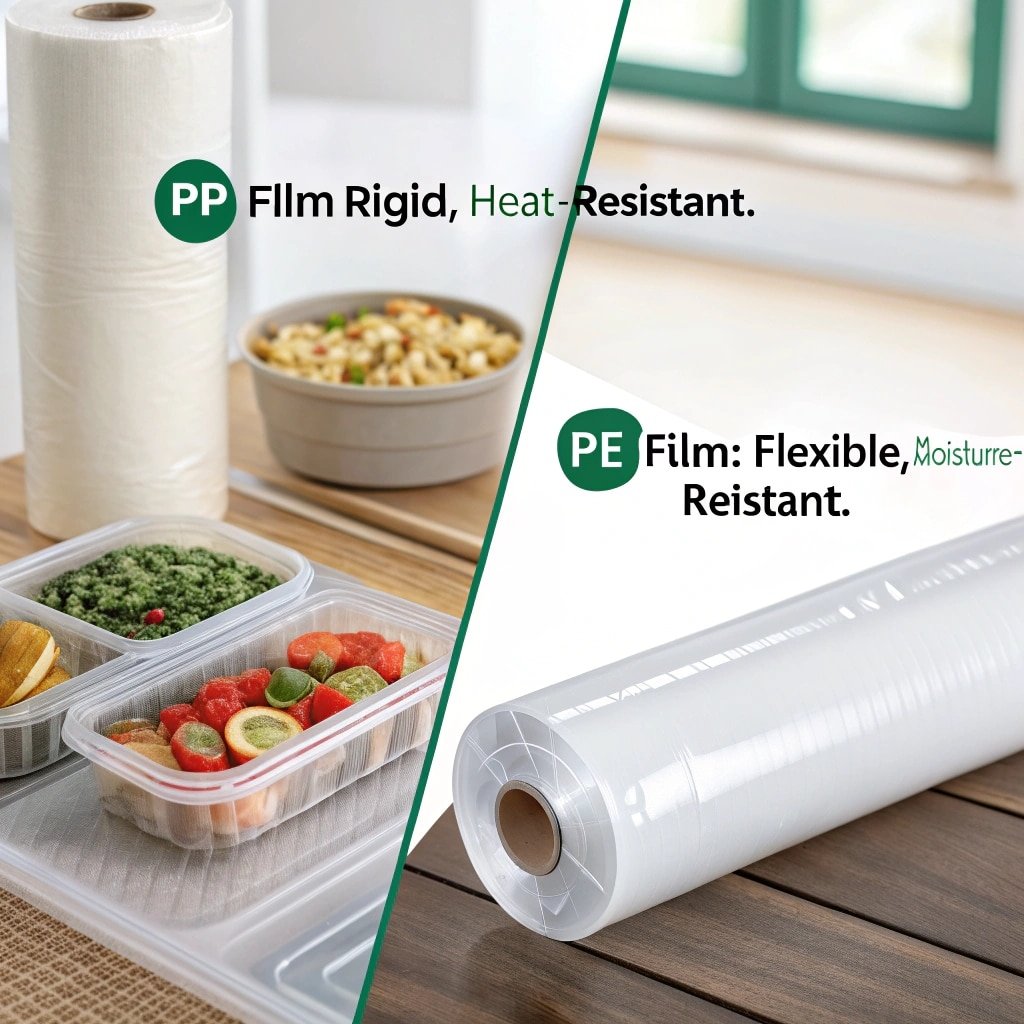
PP Film
- Rigor and Heat Resistance: PP films are stiffer, which makes them ideal for applications where rigidity is needed, such as food packaging9 or labels that require a solid structure. They can also withstand higher temperatures, which makes PP suitable for microwaveable food packaging10 or hot-fill applications.
- Clarity and Aesthetic Appeal: PP films can be produced with high clarity and a glossy finish, which makes them attractive for retail packaging and promotional products.
- Durability: Although rigid, PP films are more prone to cracking under stress compared to PE films, which makes them less suitable for applications requiring high flexibility.
PE Film
- Flexibility and Softness: PE films are softer and more flexible, making them ideal for plastic wraps11, shopping bags12, and other flexible packaging applications. PE’s flexibility allows the film to stretch without tearing, which is why it’s often used for stretch wraps or shrink films.
- Moisture Resistance: PE is highly resistant to moisture, which makes it suitable for protecting products from water and humidity. This is particularly useful for food packaging, medical supplies, and clothing bags.
- Cost-Effective: PE films are generally more affordable to produce than PP films, making them a cost-effective solution for high-volume applications.
What is the Difference Between PE and PP Insulation?
Both PP and PE are used in the insulation industry, but their performance differs based on thermal and mechanical properties. When choosing insulation materials, it’s crucial to select the right polymer based on factors like temperature, flexibility, and chemical exposure.
Snippet paragraph: PP insulation is used for high-temperature applications, while PE insulation is ideal for environments requiring flexibility and resistance to chemicals.
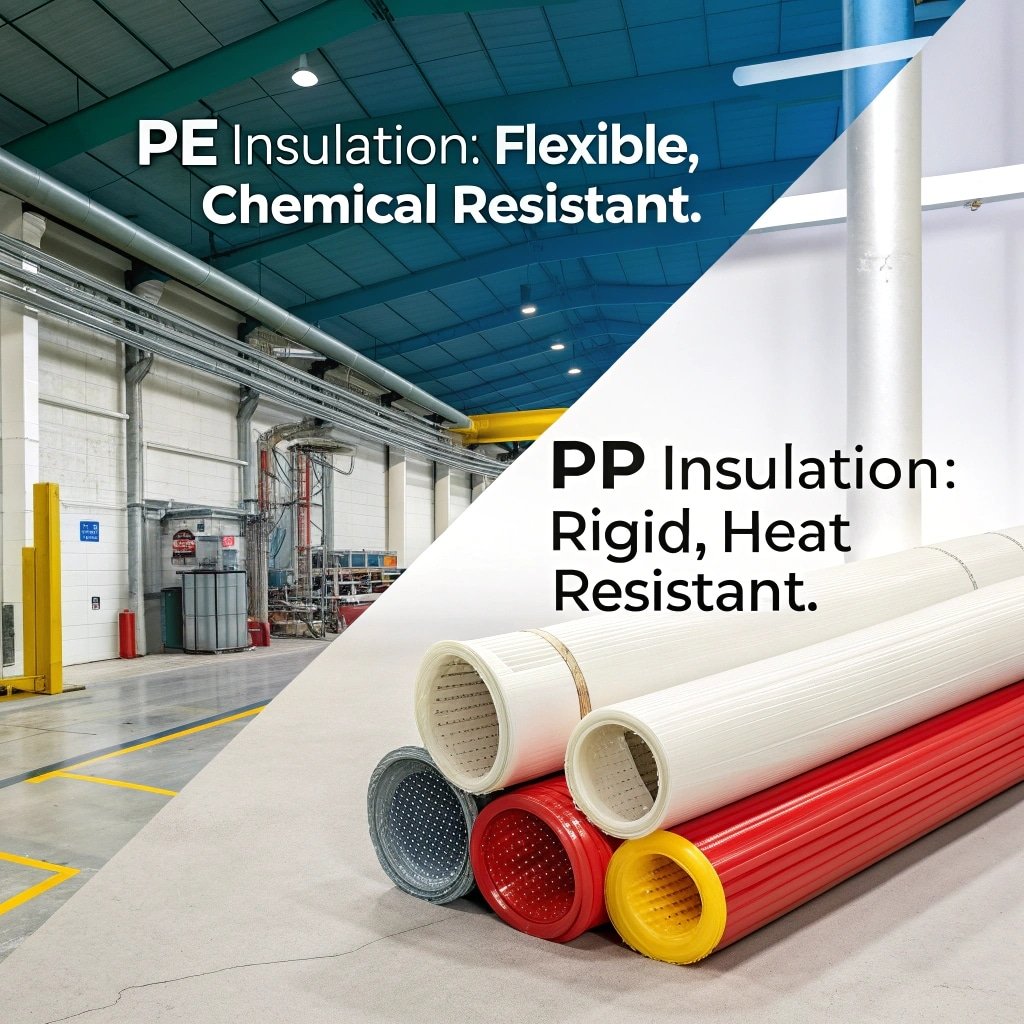
PP Insulation
- Heat Resistance: PP is favored for insulation in high-temperature environments13, as it can withstand higher temperatures (up to around 160°C). This makes it suitable for wiring in automobiles14, appliances, and electrical components where heat resistance is a must.
- Strength and Durability: The rigidity of PP insulation helps protect against mechanical damage, making it durable for applications that involve physical stress.
PE Insulation
- Flexibility: PE insulation is more flexible and can bend without breaking, which makes it ideal for applications where flexibility is needed, such as cable insulation15 and pipe insulation.
- Chemical Resistance: PE’s superior chemical resistance makes it well-suited for environments where insulation will be exposed to corrosive substances or extreme environmental conditions.
Conclusion
Understanding the key differences between PP and PE materials helps you make informed decisions based on the product’s required properties. PP is preferred for applications requiring rigidity and heat resistance, while PE excels in applications needing flexibility, chemical resistance, and moisture protection.
-
Learn why polypropylene is commonly used in rigid products like containers and packaging. ↩
-
Discover the versatility of polyethylene, especially in flexible products like bags and wraps. ↩
-
Understand the crystalline structure of polypropylene and its applications. ↩
-
Explore the amorphous structure of polyethylene and why it’s more flexible than PP. ↩
-
See why polypropylene’s stiffness and heat resistance make it ideal for specific applications. ↩
-
Learn how polyethylene’s flexibility and moisture resistance are critical for certain uses. ↩
-
PP films are more rigid; explore how they are used in packaging and labels. ↩
-
Learn why PE films are more flexible and suitable for packaging applications. ↩
-
Find out how PP is used in food packaging and the benefits of its rigidity. ↩
-
Understand how PP is used in microwaveable food packaging due to its heat resistance. ↩
-
See why PE’s flexibility and moisture resistance make it perfect for plastic wraps. ↩
-
Explore why polyethylene is commonly used for shopping bags and flexible packaging. ↩
-
Learn about PP’s heat resistance and its use in high-temperature insulation. ↩
-
Find out why PP insulation is ideal for use in automotive and electrical applications. ↩
-
Understand why PE’s flexibility and chemical resistance make it ideal for cable insulation. ↩
Related reading: Air vs Sea for Rush Bag Orders: The Break-Even Every Planner Should Know

0 Comments