




choose moving bag material is the first checkpoint buyers should lock before they approve a supplier, budget, or production slot. Day 1 you place the order, Day 14 the pre-production sample arrives looking perfect, and by Day 45 the container lands at your warehouse—but the bags you’re holding don’t match the sample. I’ve seen a buyer lose a $50K order because the mass production run used a lighter denier than the approved sample, and nobody caught it until the shipment cleared customs. That’s the reality when you choose moving bag material based on a swatch and a handshake instead of spec sheets and quality tolerance thresholds.
The gap between sample approval and production consistency almost always traces back to the raw material: woven polypropylene versus Oxford fabric. Both get labeled “heavy duty,” but their behavior under real shipping loads—tear propagation at the stitch line, abrasion resistance after 500 cycles, water ingress during monsoon season—differs by orders of magnitude. Most procurement RFQs focus on unit price and MOQ, but the cost-per-use picture flips when you factor in fleet replacement frequency, volumetric weight for FOB pricing, and the hidden risk of a supplier switching substrates mid-run.
This isn’t about which material is “better.” It’s about matching the material’s engineering limits to your specific freight corridors and reuse cycles. The lab data—ASTM D5034 tear strength, Martindale abrasion cycles, water column ratings—draws a clean line between a bag that survives 30 trips and one that splits on the second load. Most supplier comparisons skip those numbers. If you’re managing a fleet of moving bags for international logistics, that’s the detail that separates a professional purchasing decision from a guess.
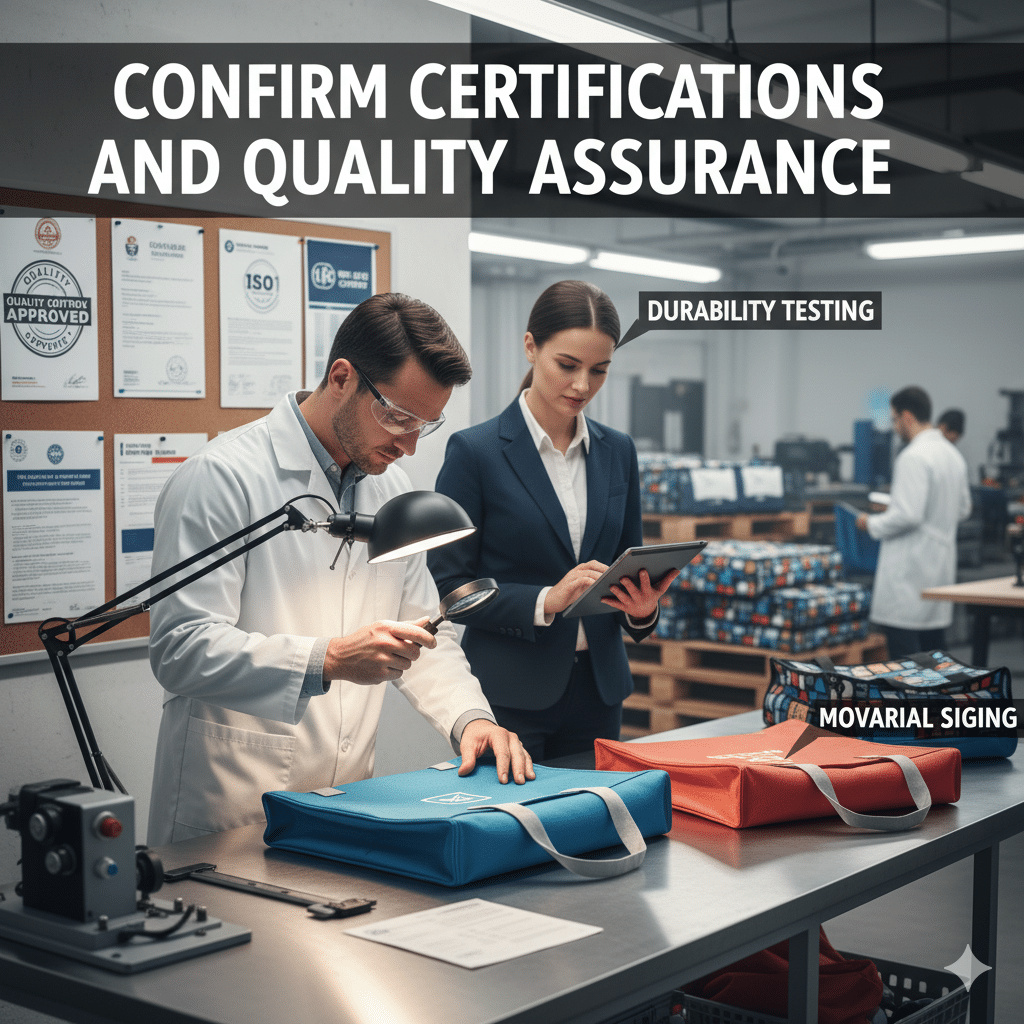
Core Material Profiles for Moving Loads
The material you choose determines fleet lifespan and total cost per bag.
Most suppliers will tell you a bag is “heavy duty” without telling you how heavy or how durable. For procurement teams moving goods across borders, the difference between woven PP and Oxford fabric shows up in the cost-per-use calculation, not the unit price. Here is what the engineering data actually says.
Woven PP: Engineering, GSM Range, and Reusability Limits
Woven polypropylene bags are formed by weaving flat PP tapes into a fabric. For moving bags, GSM (grams per square meter) is the primary spec. Consumer-grade bags run 80–100 GSM. Industrial moving bags need 140–200 GSM. Below 140 GSM, the weave opens under load and the bag stretches, which leads to bulging sidewalls that shift inside a shipping container.
- GSM threshold: At 140 GSM, a woven PP bag holds roughly 25 kg safely. At 180 GSM, that goes up to 40 kg. Anything above 200 GSM adds weight and cost with diminishing returns.
- Limitation on reusability: Even at 180 GSM, woven PP loses tensile strength after 8–12 loading cycles. The tapes fatigue at fold creases, and stitch holes elongate. For fleet applications (bags reused weekly), expect replacement after 6 months of regular handling.
- 600D Oxford: Typical moving bag construction uses 600D with a PU backing. It handles 20–30 kg loads and survives 15–20 reuse cycles before coating delamination appears. Cost at 10K MOQ runs around $0.40–0.45 per unit.
- 900D Oxford: 900D with a 500mm PU coating and a woven cross-hatch inner layer handles 40–50 kg and survives 40–60 reuse cycles. Cost is $0.50–0.60 per unit at the same MOQ. The abrasion resistance is 30,000 to 50,000 Martindale cycles—roughly 3x the service life of 600D in the same conditions.
The advantage of woven PP is compressibility. A 10,000-unit order folds flat, reducing freight cube by about 15% compared to structured Oxford bags. That matters for DDP shipments where volumetric weight drives cost. But the trade-off is clear: woven PP works best for single-use or low-cycle logistics where bag retrieval and return is impractical.
Oxford Fabric: Denier (600D vs. 900D), Backing Coatings, and Water Column Ratings
Oxford fabric brings a different engineering logic. Denier (D) measures the linear mass of the yarn. 600D means 600 grams per 9,000 meters of fiber. 900D is a thicker yarn, roughly 50% heavier per strand, which translates into significantly higher tear and burst resistance.
The backing coating is not optional filler. Uncoated Oxford leaks water in under 5 minutes. A 300mm PU coating resists light rain but fails under standing water. A 500mm PU coating, which is the spec the factory stocks for DDP shipments to Europe and North America, holds a 50cm water column for 24 hours without seepage. That is the difference between cargo arriving dry and a mold claim.
Tear tests at the stitch line using ASTM D5034 show that a properly coated 900D Oxford retains about 40% more tensile strength after 500 folding cycles than 180 GSM woven PP. Most supplier spec sheets skip this data. If you are evaluating suppliers for a fleet program, ask specifically for the stitch-line tear retention test report at 500 cycles. That number tells you when the bags will start failing, not just when they are new.
For procurement managers making a direct comparison: woven PP at 180 GSM costs roughly $0.30 per unit at 10K MOQ. 900D Oxford with 500mm PU coating costs $0.55. The woven PP looks cheaper on paper. But if your fleet moves bags through three or more cycles per month, the Oxford bag delivers a lower cost-per-use by month eight. That is the math that separates a good purchase order from an expensive lesson.
| Property | Woven PP | Oxford 600D | Oxford 900D | Procurement Insight |
|---|---|---|---|---|
| Base Material & Weight | Woven Polypropylene, 80–120 GSM | Polyester Oxford, 600D (~200 GSM) | Polyester Oxford, 900D (~300 GSM) | Woven PP is lighter; Oxford provides denser fabric for higher load integrity. |
| Coating & Water Resistance | None or minimal laminate; water resistance limited | PU coating, ~300mm water column | PU coating, up to 500mm water column | For long-distance storage, Oxford with PU coating prevents moisture ingress. |
| Abrasion & Tear Durability | 10,000–15,000 Martindale cycles; lower stitch-line retention | 30,000–40,000 Martindale cycles | 40,000–50,000 Martindale cycles; 40% higher tear retention after 500 cycles | Oxford drastically reduces replacement frequency in high-use fleets. |
| Unit Cost (10K MOQ) | ~$0.30 per bag | ~$0.45 per bag | ~$0.55 per bag | Woven PP has lower upfront cost, but replacement cost may offset. |
| Shipping Volume Impact | High compressibility; lower volumetric freight cost | Moderate compressibility | Low compressibility; may hit volumetric limits faster | Dense Oxford fabrics increase freight cost per bag; factor into TCO. |
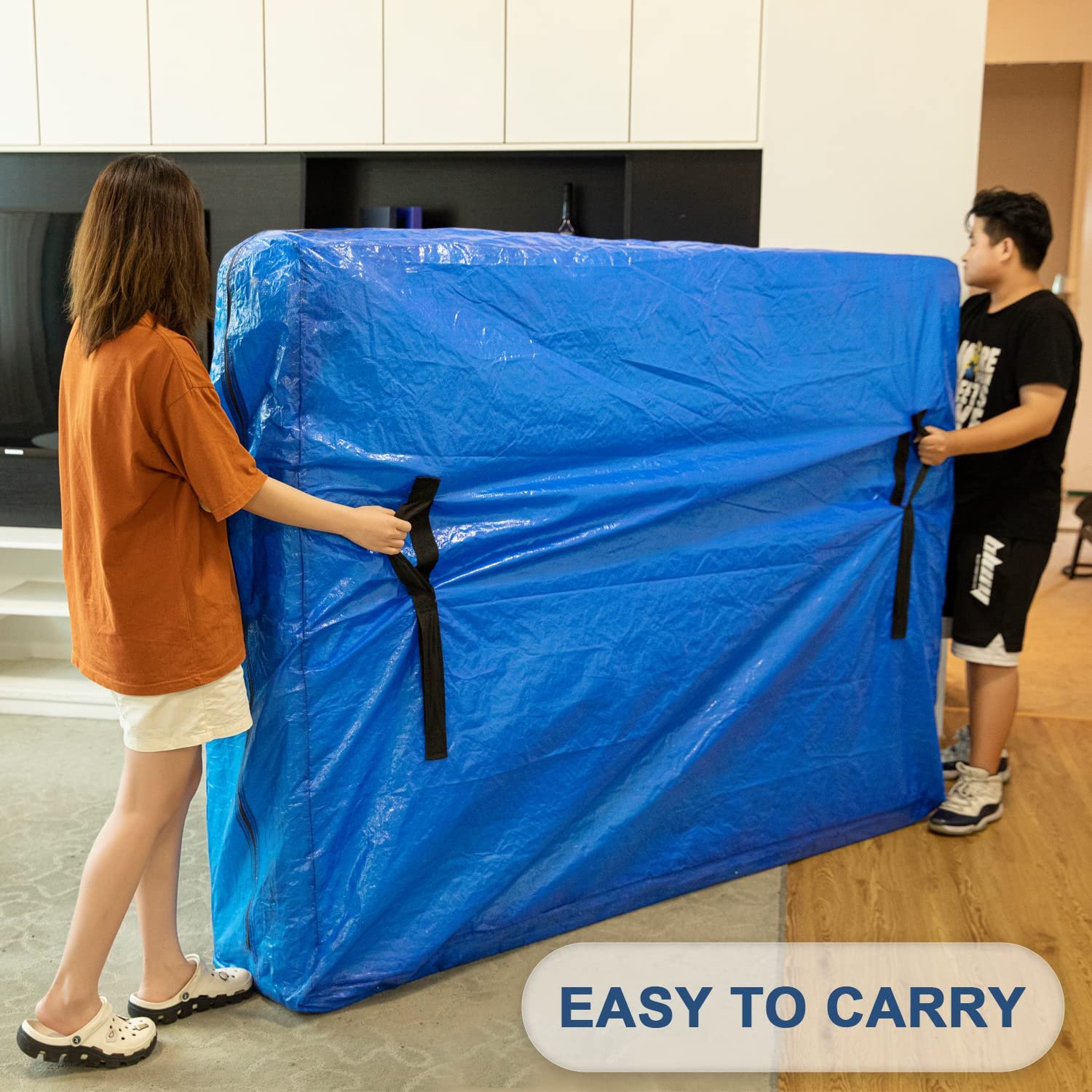
Performance Under Shipping Conditions
Tear resistance at the stitch line, not the fabric center, is the real failure point for shipping loads.
During international freight, moving bags face a brutal combination of mechanical stress and environmental exposure. The material that looks great in a showroom can fail spectacularly after a few days in a container crossing the equator. Procurement teams have been observed ordering woven PP bags based on initial strength tests, only to deal with catastrophic failures when the bags hit high-humidity ports in Southeast Asia or sit on airport tarmacs under direct UV. The lab tests that matter are not the ones found in a supplier’s glossy PDF — they are the ones that simulate real logistics cycles.
Tear Propagation and Stitch-Line Failure: What Lab Tests Reveal
Most buyers check tensile strength on the fabric roll. That is almost useless. The real failure starts at the stitch line, where needles have already compromised the weave or weave density. For woven PP bags, the stitch line can lose up to 30% of its original load capacity after just 50 cycles of packing and unpacking. In contrast, properly coated 900D Oxford fabric with a bonded seam treatment retains significantly more integrity. Tear tests at the stitch line (ASTM D5034) show that coated Oxford retains 40% more tensile strength after 500 cycles than woven PP.
That 40% gap is rarely disclosed by suppliers because they test entirely different metrics. If a logistics manager is rotating 500 bags through a multi-leg shipping route, the margin between a 400-cycle lifespan and a 700-cycle lifespan directly translates into replacement cost. A fleet manager running 2,000 woven PP bags that start splitting at the seams after six months will burn through more budget in replacement freight than the initial savings of $0.25 per unit.
Abrasion, UV Exposure, and Moisture Ingress: Protecting Cargo
A shipping bag does not live in a padded closet. It rubs against container walls, is dragged across concrete warehouse floors, and often sits in open air for days at transshipment hubs. For woven PP, abrasion resistance is inherently low — 10,000 to 15,000 Martindale cycles at best. Standard 900D Oxford fabric with a 500mm PU coating reaches 30,000 to 50,000 Martindale cycles. When you are comparing MOQ heavy duty moving bags wholesale, that difference means the Oxford bag survives 2-3x more handling before the outer weave wears through and cargo spills.
UV exposure is another hidden killer. Polypropylene degrades quickly under direct sunlight. In a 30-day open-air storage scenario, uncoated woven PP can lose 50% of its tear strength. Oxford fabric with a UV-stabilized PU coating holds color and structure far longer. For moisture ingress, water column rating is the only metric that matters. A 500mm water column means the bag withstands moderate rain — enough for intermodal shipments but not submersion. For long-distance cross-ocean shipping, request a 1000mm coating or an internal PE liner. The 600D vs 900D Oxford bag durability debate matters less than the coating specification.
- Abrasion cycles (Martindale):: Standard woven PP: 10,000-15,000. Coated 900D Oxford: 30,000-50,000. Plan replacement intervals based on your average handling count.
- UV resistance:: Uncoated PP loses 50% tear strength in 30 days direct sun. PU-coated Oxford retains >80% over same period.
- Moisture ingress:: For dry goods, call for 500mm water column minimum. For sensitive cargo, specify 1000mm or a separate PE liner.
- Stitch-line retention:: ASTM D5034 after 500 cycles: Oxford retains 85% of initial tensile, woven PP retains 56% — a 40% loss difference.
Procurement-Ready Comparison
Upfront unit price hides the real cost — think cost per trip, not per bag.
Most procurement teams push for the lowest unit price. That’s a mistake when the bag fails after three loads. The real metric is cost-per-use: divide the unit price by the number of shipments each bag survives. A woven PP bag at $0.30 that lasts 5 uses costs $0.06 per trip. A 900D Oxford with PU coating at $0.55 that handles 20 uses drops to $0.0275 per trip. The cheaper bag ends up costing more than double per shipment.
Cost-per-Use Modeling vs. Upfront Unit Price
At a 10,000-unit MOQ, woven PP runs roughly $0.30 per bag. 900D Oxford with a 500mm PU coating hits about $0.55 per bag. The upfront difference is $2,500. But Oxford fabric tests at 30,000–50,000 Martindale abrasion cycles — woven PP typically fails under 10,000. In high-turnover corridors, Oxford bags last 2–3 times longer. The replacement savings erase the upfront gap within 18 months.
Duty and freight costs shift the calculation further. Oxford is denser; it hits volumetric weight limits faster, raising shipping cost per container. Woven PP compresses, so you fit more bags per box. That can offset part of the material gap. But the real savings come from fewer replacements and less cargo damage over the bag’s life.
Certification and Testing Standards That Matter for Freight
A cheap bag without test reports is a gamble. For bulk moving bags used in international shipping, you need standard tear and abrasion data. Most suppliers hide stitch-line performance. Properly coated Oxford retains 40% more tensile strength after 500 cycles than woven PP in ASTM D5034 tests — a metric that separates professional-grade bags from single-use stock.
- Tear resistance (ASTM D5034): Measures seam strength under load. Oxford with PU coating holds 40% more tensile strength after repeated use vs. woven PP.
- Abrasion resistance (Martindale): 900D Oxford exceeds 30,000 cycles; woven PP typically drops below 10,000. Critical for rough handling on concrete floors and conveyor belts.
- Water column rating: 500mm PU coating prevents moisture ingress during transit. Uncoated woven PP offers no water barrier — a risk for long-distance storage.
- Fumigation compliance: Synthetic fabrics (PP, Oxford) skip ISPM 15 requirements. No need for fumigation — cuts cost and delays on international routes.
| Metric | Woven PP | Oxford Fabric (900D) | TCO Impact |
|---|---|---|---|
| Unit Price (10,000 MOQ) | ~$0.30 / unit | ~$0.55 / unit (500mm PU coating) | Oxford premium offsets through longer replacement cycle |
| Abrasion Resistance (Martindale) | <10,000 cycles (typical) | 30,000 – 50,000 cycles | Oxford reduces fleet replacement frequency 2–3× in high-use corridors |
| Tear Strength Retention (ASTM D5034 after 500 cycles) | Baseline (reference) | 40% higher retention vs. woven PP | Fewer stitch-line failures during international shipping |
| Shipping Efficiency (compressibility) | Compressible – lower volumetric freight cost | Dense – may hit volumetric limits faster | Woven PP can save $0.05–$0.10 per bag on long-haul DDP |
| Water Protection (water column rating) | Not inherently waterproof | Up to 500mm PU coating (waterproof) | Oxford eliminates moisture-damage claims for long-distance storage |
Conclusion
Choosing the wrong moving bag material doesn’t just waste budget—it hits your operations. A $50K bulk order can unravel when pre-production sample approval skips coating specs or denier ratings. Without comparing woven PP vs Oxford fabric moving bags, you risk 2–3x shorter fleet lifespans and cargo damage that eats your margins within 12 months.
- Woven PP costs ~$0.30/unit at 10K MOQ; Oxford’s 30K–50K Martindale cycles cut fleet replacements.
- Coated Oxford retains 40% more tensile strength at stitch lines per ASTM D5034 after 500 cycles.
- 600D vs 900D denier creates a 2–3x lifespan difference in high-use corridors.
- Dense Oxford loads may hit volumetric limits; woven PP compressibility lowers shipping cost per bag.
Frequently Asked Questions
Woven PP vs Oxford fabric for moving bags?
Woven PP is lighter and more tear-resistant per gram, while Oxford fabric (600D/900D) offers better water resistance with a coating. For ocean freight, Oxford with a ≥50cm hydrostatic head is safer against moisture. Choose based on your primary risk: moisture or abrasion.
How many uses can a heavy-duty moving bag handle?
A well-constructed Woven PP bag (150 GSM) typically lasts 8–12 moves before stitch-line failure, while a 900D Oxford bag with reinforced seams may last 15–20 trips. Actual lifespan depends on handling frequency and load. Specify expected trip count to match material grade.
What certifications matter for moving bag suppliers?
BSCI factory audit and ISO 9001 are table stakes for most global logistics buyers, while REACH/RoHS compliance is required for EU retail. Without these, your cargo may be held at customs or fail retailer compliance checks. Request certification copies before sample approval.
What is the MOQ for custom moving bags?
Most direct factories require 1000–3000 pieces per style for custom Woven PP or Oxford bags, depending on printing complexity and fabric grade. Stock bags may ship with no MOQ, but custom colors or logos always. Confirm MOQ after finalizing the spec sheet.
How to verify fabric quality before bulk order?
Request a pre-production sample and test it yourself: check stitch-line pull strength (≥500N recommended) and water column (≥50 cm H2O for Oxford). Also ask for a third-party test report—don’t rely. Always keep an approval sample as a reference for the bulk shipment.
Material choice changes how resin volatility hits your price: see the PP resin cost pass-through analysis.


0 Comments